
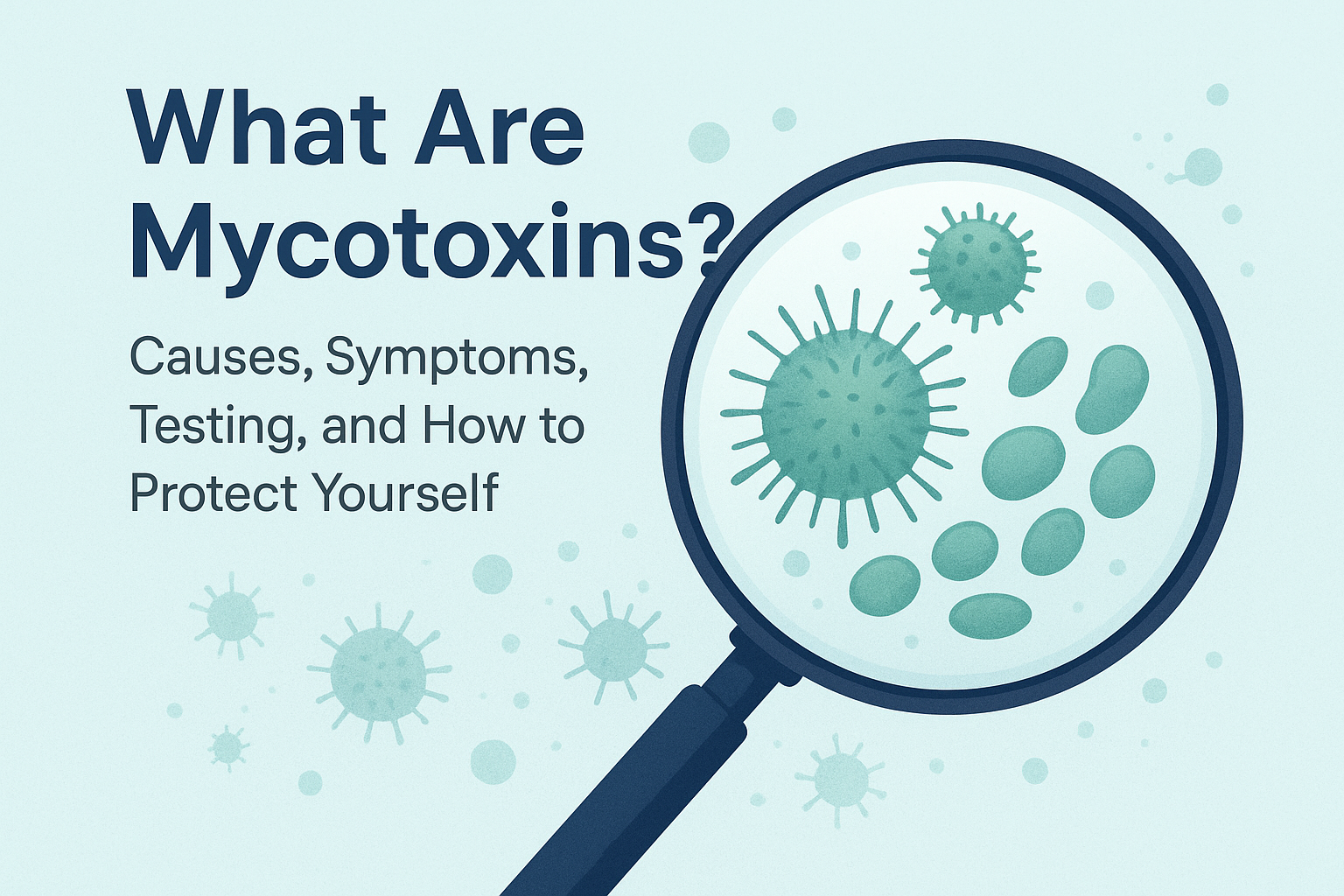
Mycotoxins are toxic substances produced by certain types of mold and fungi. They can contaminate food, grow inside buildings, and spread through air and dust. While many people associate mold exposure with simple allergies, mycotoxins are far more dangerous—they can affect immunity, digestion, hormones, and even the nervous system.

What Are Mycotoxins?
Mycotoxins are poisonous compounds produced by fungi such as Aspergillus, Penicillium, and Fusarium. These molds grow on foods, crops, and in damp indoor environments. Mycotoxins are invisible, odorless, and remain harmful even after the mold itself is removed.
Mycotoxins can enter your body by:
- Absorbing them through your skin
- Drinking or eating (ingesting) them
- Inhaling them
Common sources include:
Contaminated grains (corn, wheat, barley)
Nuts (peanuts, pistachios, walnuts)
Coffee beans
Spices
Dried fruits
Water-damaged buildings
HVAC systems and basements with moisture
Young children, people with allergies, individuals with compromised immune systems, and chronic illness sufferers are often more sensitive to mycotoxin exposure.
What are the groups of mycotoxins?
There are hundreds of types of mycotoxins, and several groups of fungi may produce the same type. But the mycotoxin groups that most commonly affect animals and people include:
- Aflatoxins: Multiple species of the fungus Aspergillus produce aflatoxins. The fungi typically grow in soil and decaying vegetation. They can also grow on most crops or foods.
- Fumonisins: Many different types of fungi produce fumonisins. But the fungus Fusarium most commonly affects animals and people.
- Trichothecenes: Though lots of fungi produce trichothecenes, the fungus Fusarium commonly affects animals and people because it grows on barley, corn and wheat.
- Zearalenone: Multiple species of the fungus Fusarium produce zearalenone. It commonly affects cereal crops, including corn, oats, rice and wheat.
How Mycotoxins Affect the Human Body
Mycotoxins trigger inflammation and can cause long-term damage depending on the type and length of exposure.
Potential health effects include:
Immune system suppression
Hormonal imbalance
Liver and kidney toxicity
Brain fog, headaches, and memory issues
Respiratory symptoms like coughing or wheezing
Skin rashes and allergic reactions
Because symptoms are often vague, many people suffer from mycotoxin exposure without realizing the cause.
What do mycotoxins do to people?
It depends on how mycotoxins enter your body. Ingesting a lot of mycotoxins at the same time can cause sudden (acute) illness. Symptoms usually affect your gastrointestinal (GI) tract (esophagus, stomach, small intestine, large intestine and rectum). Symptoms may get worse if you drink alcohol, have malnutrition or have another health condition.
Ingesting smaller amounts of mycotoxins over a period of time can cause long-term (chronic) illness. Symptoms can affect your mental function (cognition) and increase your risk of developing asthma and cancer.
What are the symptoms of mycotoxin poisoning?
There are many different types of mycotoxins that may produce a variety of symptoms. But common mycotoxin poisoning symptoms include:
- Abdominal pain
- Blurred vision
- Brain fog
- Brain swelling (cerebral edema)
- Diarrhea
- Dizziness
- Fever
- Fluid buildup in your lungs (pulmonary edema)
- Headache
- Nausea and vomiting
- Short-term memory loss
Serious mycotoxin poisoning complications may include:
What foods are high in mycotoxins?
Molds that produce mycotoxins typically affect grains and nuts. But they can also affect produce. Common foods and drinks that mycotoxins may affect include:
- Apples and apple juice
- Celery
- Cereals
- Coffee beans
- Corn
- Dried fruit
- Grapes and grape juice
- Oats
- Peanuts
- Rice
- Rye
- Spices
- Wheat
Mycotoxin Testing
Testing helps determine whether symptoms are caused by mycotoxin exposure.
Types of testing include:
Urine Mycotoxin Testing: Detects toxins such as ochratoxin A, aflatoxins, and trichothecenes.
Environmental Mold Testing: Air sampling and surface swabs to measure mold spore count and toxin presence.
When should you get tested?
Unexplained chronic symptoms
Known water-damaged home
Constant fatigue or brain fog
You work around old buildings, libraries, warehouses
Severe allergies or respiratory symptoms
Children, elderly adults, and immunocompromised individuals should consider testing sooner.
How to Protect Yourself From Mycotoxins
Store food properly
Keep dry foods in airtight containers
Avoid eating visibly moldy foods
Don’t consume foods past expiration if improperly stored
Choose high-quality products
Buy reputable brands
Choose organic grains and nuts when possible
Avoid cheap, low-quality coffee
Prevent indoor mold
Fix leaks immediately
Use a dehumidifier in damp areas
Clean HVAC filters regularly
Increase ventilation
Improve air quality
Use air purifiers with HEPA + activated carbon
Keep humidity between 30–50%
When to Seek Medical Help
Contact a healthcare provider if you experience:
Persistent breathing issues
Chronic fatigue with no known cause
Severe headaches
Persistent rashes
Worsening allergies
Symptoms after moving into a damp home or workplace
Early assessment helps prevent long-term damage.
Conclusion
Mycotoxins are invisible but powerful toxins that affect millions of people through contaminated food and mold exposure. By learning how to identify risks, test for exposure, and protect your home and diet, you can significantly reduce their impact on your health.
If you or a client suspect mycotoxin exposure, consider professional testing and consultation to guide treatment and detox safely.
Say Goodbye To Waiting Rooms And Long Lines. Speedy Sticks offers at-home testing.