


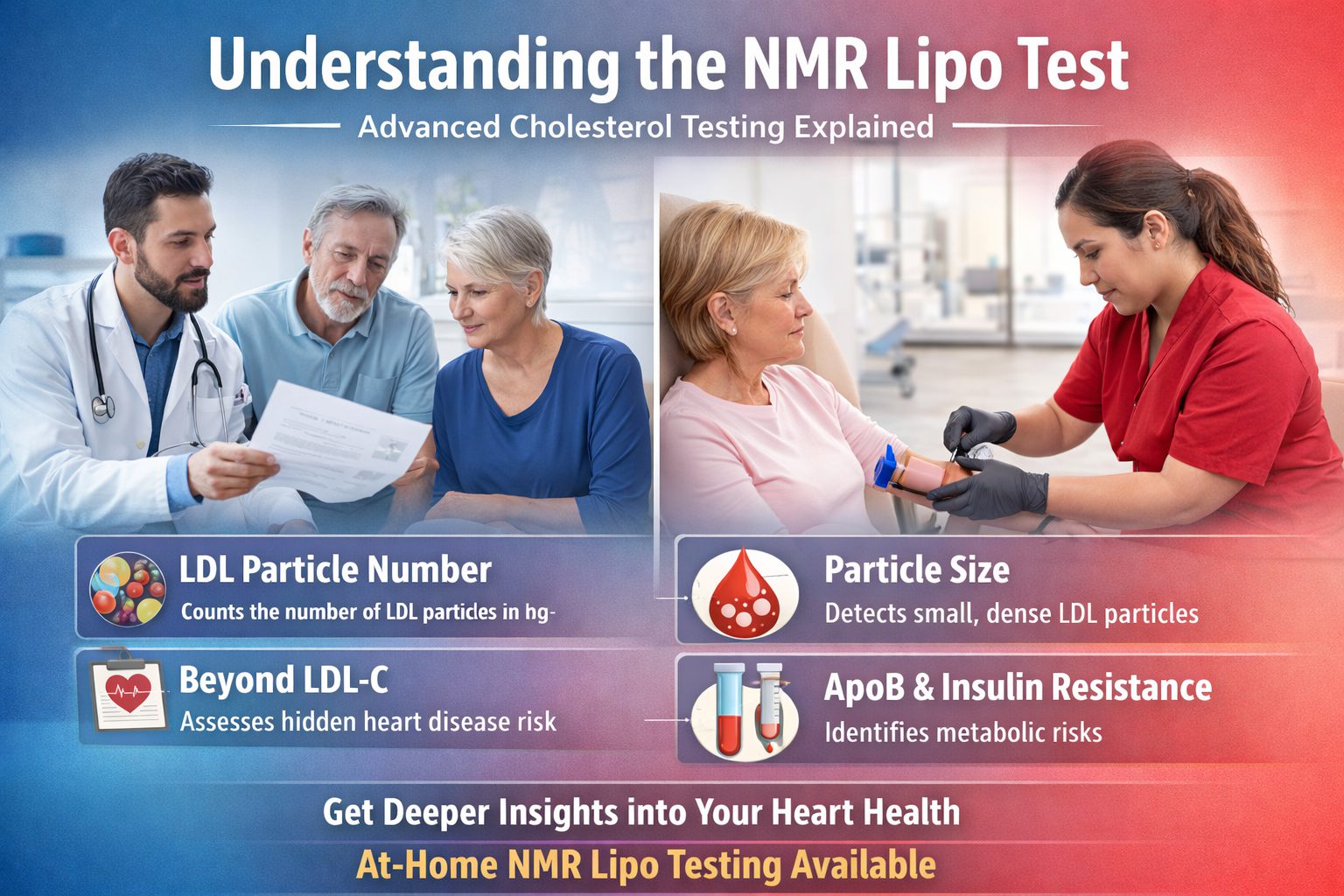
When it comes to cholesterol, the numbers you’ve been watching may not be telling the full story. A standard lipid panel measures how much cholesterol is in your blood, but not how it’s behaving. That’s where the NMR Lipo Test comes in.
This advanced form of cholesterol testing looks deeper, helping uncover hidden cardiovascular risk that traditional tests often miss.

What Is the NMR Lipo Test?
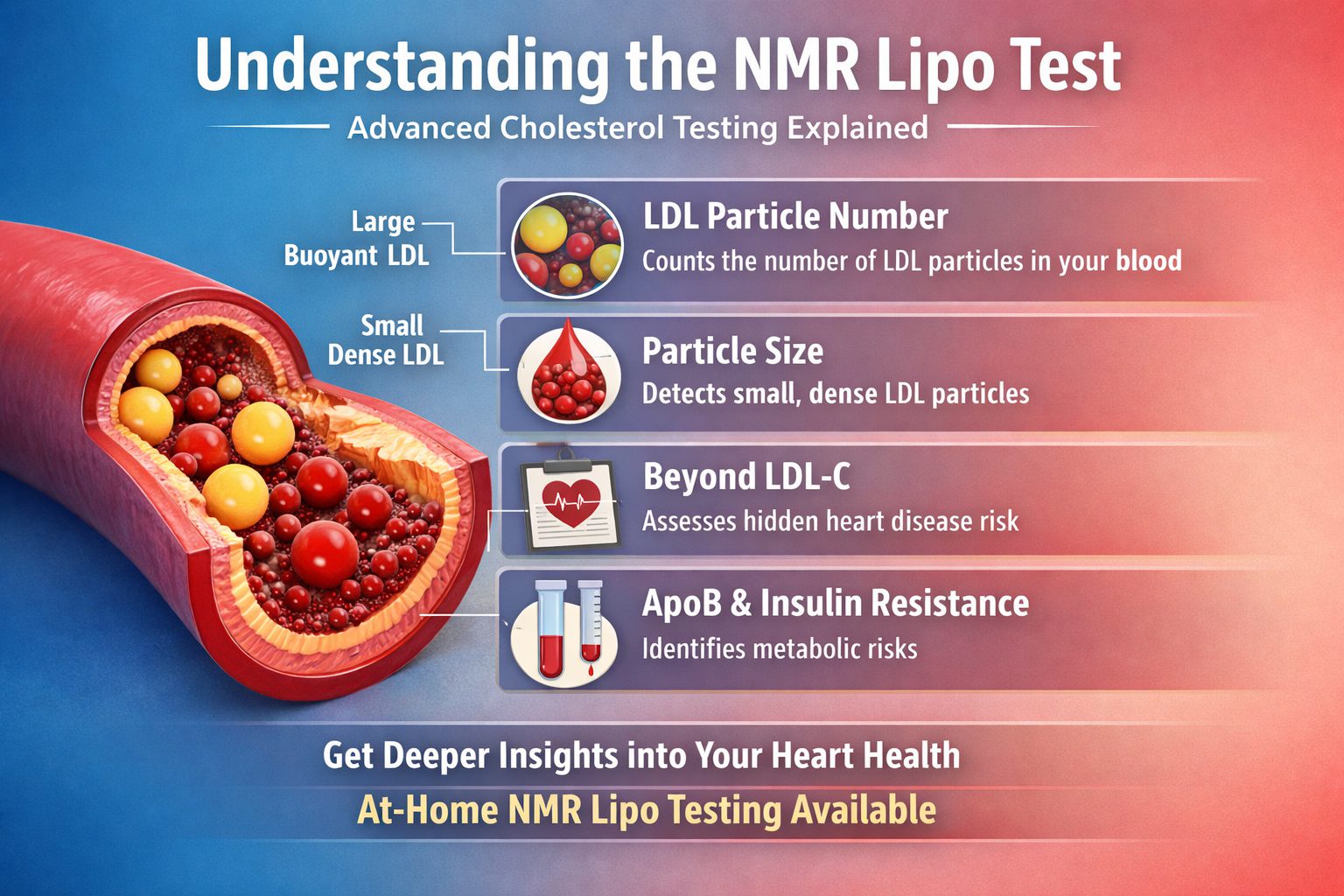
The NMR Lipo Test (also called an NMR lipid profile) is a form of advanced cholesterol testing that measures lipoprotein particle number and size, not just cholesterol concentration. NMR Lipo testing is typically used when traditional lipid results don’t match a patient’s clinical risk profile.
Cholesterol travels through your blood inside particles (lipoproteins).
More particles = more chances to damage arteries, even if your cholesterol looks “normal.”
The NMR Lipo Test uses nuclear magnetic resonance technology to count those particles directly.
This is especially important for identifying small dense LDL, the type most strongly linked to plaque buildup and heart disease risk.
How Is It Different From a Standard Lipid Panel?
A traditional lipid panel focuses on cholesterol content. The NMR Lipo Test focuses on cholesterol carriers.
Standard Lipid Panel vs NMR Lipo Test
| Feature | Standard Lipid Panel | NMR Lipo Test |
|---|---|---|
| Measures LDL-C (cholesterol amount) | ✅ Yes | ❌ Not primary |
| Measures LDL particle number (LDL-P) | ❌ No | ✅ Yes |
| Detects small dense LDL | ❌ No | ✅ Yes |
| Assesses insulin resistance patterns | ❌ Limited | ✅ Strong |
| Advanced cardiovascular risk assessment | ❌ Basic | ✅ Advanced |
Who Should Consider an NMR Lipo Test?
The NMR Lipo Test is especially valuable if you fall into one or more of these groups:
Family History of Heart Disease
If heart disease runs in your family, advanced cholesterol testing can reveal inherited risk earlier—before symptoms appear.
Normal Cholesterol but High Risk
Many people experience heart events despite “normal” lipid panels. The NMR Lipo Test helps explain why.
Metabolic Syndrome or Insulin Resistance
Insulin resistance often leads to:
Higher LDL particle number
Smaller, denser LDL particles
Increased cardiovascular risk
The NMR lipid profile is particularly useful in this population.
What Do NMR Lipo Results Mean?
Here’s how to understand your results in human terms:
LDL-P (LDL Particle Number):
How many LDL particles are circulating. Higher = higher heart disease risk, regardless of LDL-C.HDL-P (HDL Particle Number):
Reflects the number of protective HDL particles helping remove cholesterol from arteries.VLDL Particles:
Often linked to triglycerides and insulin resistance.Particle Size:
Small dense LDL particles are more likely to penetrate artery walls and cause plaque buildup.
Many clinicians also evaluate these results alongside ApoB, another marker closely tied to particle-related risk.
How the Test Is Performed
The NMR Lipo Test requires a simple blood draw—no imaging, no procedures.
Process:
Blood sample is collected
Sample is sent to a specialized lab
Advanced analysis generates your NMR lipid profile
This test can be performed at home, eliminating the need to visit a lab.
Can You Get an NMR Lipo Test at Home?
Yes.
With licensed mobile phlebotomy, your blood draw can be completed from the comfort of your home or office—ideal for busy professionals, families, or patients managing chronic conditions.
At-home collection improves:
Convenience
Compliance
Follow-through on preventive care
Need an NMR Lipo Test Drawn at Home?
Speedy Sticks provides licensed, nationwide mobile phlebotomy for advanced lipid testing—including NMR Lipo profiles.
✔ No waiting rooms
✔ Flexible scheduling
✔ Professional, compliant collections
Book an at-home blood draw today
Bottom line:
If you care about true cardiovascular risk—not just surface-level numbers—the NMR Lipo Test delivers insight that standard cholesterol panels simply can’t.
Say Goodbye To Waiting Rooms And Long Lines. Speedy Sticks offers at-home testing.