
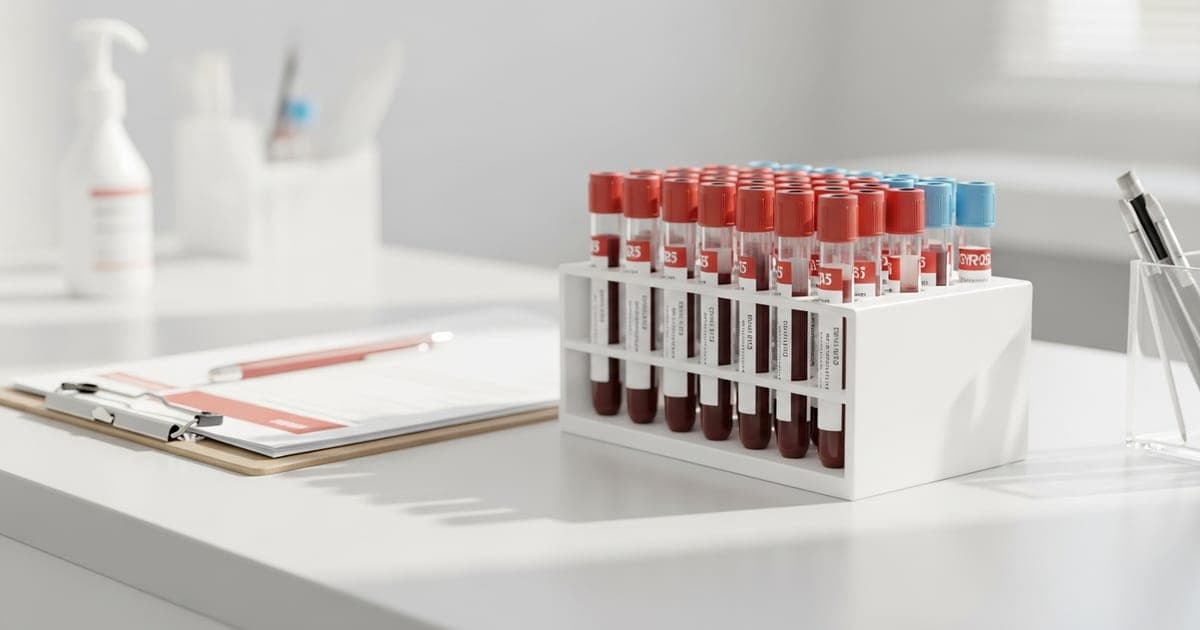
Blood glucose testing and urine glucose testing both detect abnormalities in sugar regulation, but they differ in accuracy, timing, and clinical use. Blood glucose measures your current blood sugar in real time. Urine testing detects glucose that has already passed through the kidneys — a delayed signal from hours earlier. For active diabetes management, blood testing is the standard; urine testing plays a supplemental role.
What each test measures
Blood glucose testing uses a small blood sample — via fingerstick or continuous glucose monitor (CGM) — to show your current blood sugar level immediately. The result is actionable: you can adjust insulin, food, or activity based on the number right now.
Urine testing detects glucose or ketones that have spilled past the kidney's reabsorption threshold. Glucose appears in urine only when blood sugar exceeds roughly 180 mg/dL — the renal threshold. Below that level, urine testing shows nothing, even if blood glucose is elevated.
When to use blood glucose vs. urine testing
Blood glucose testing is the right tool for daily diabetes management — particularly for patients on insulin or anyone experiencing frequent blood sugar swings. It allows immediate decision-making about food, medication timing, and activity.
Urine testing is used in screening scenarios, early pregnancy checks, and situations where blood testing is not accessible. It is also helpful for monitoring ketones in Type 1 diabetes patients during illness or periods of high blood sugar, when diabetic ketoacidosis (DKA) is a concern.
Glycosuria: when sugar appears in urine
Glycosuria occurs when blood sugar exceeds the kidney's capacity to reabsorb glucose — typically above 180 mg/dL. It is often an early sign of uncontrolled diabetes. However, glycosuria can also occur without diabetes in conditions such as renal glycosuria (a genetic condition affecting kidney glucose reabsorption) and Fanconi syndrome.
Common causes of sugar in urine
| Cause | Description |
|---|---|
| Type 1 & 2 Diabetes | High blood glucose spills into urine |
| Gestational Diabetes | Pregnancy-related insulin resistance |
| Renal Glycosuria | Genetic condition unrelated to blood sugar levels |
| Fanconi Syndrome | Kidney tubule dysfunction affecting glucose reabsorption |
| Stress Hyperglycemia | Short-term spike due to illness or anxiety |
Pros and cons of each method
| Feature | Blood Glucose Monitoring | Urine Testing |
|---|---|---|
| Accuracy | High — real-time current level | Low — delayed, threshold-dependent |
| Timeliness | Immediate result | Reflects levels from hours prior |
| Invasiveness | Requires fingerstick or CGM sensor | Non-invasive urine sample |
| Detects ketones | Only with specialized meters | Yes — urine ketone strips widely available |
| Best use | Daily management and insulin dosing | Preliminary screening and ketone monitoring |
Urine testing in daily diabetes care
Urine testing is not a replacement for blood glucose monitoring. It cannot detect hypoglycemia at all — low blood sugar stays below the renal threshold and never appears in urine. It also cannot guide insulin dosing, since urine glucose reflects a historical average rather than the current moment.
Its main clinical role today is ketone detection. When a Type 1 patient's blood sugar exceeds 240 mg/dL, urine ketone strips provide a quick check for DKA risk. Urine testing is also useful in low-resource settings and for routine screenings during prenatal care.
What to do if sugar appears in your urine
A positive urine glucose result is a flag, not a diagnosis. Follow up with a fasting blood glucose test, an A1C, or an oral glucose tolerance test. A single positive reading may reflect temporary hyperglycemia, stress, or a benign renal condition. Consistent results across multiple tests are more clinically significant.
Frequently asked questions
Is urine testing enough to manage diabetes?
No. Urine testing cannot show real-time glucose levels, detect low blood sugar, or guide insulin dosing. Blood glucose monitoring is essential for diabetes management.
Are urine test results reliable?
For screening purposes, yes. For active management, no — results reflect levels from several hours earlier and miss all readings below the renal threshold of approximately 180 mg/dL.
Can glycosuria exist without diabetes?
Yes. Renal glycosuria and Fanconi syndrome cause glucose to appear in urine at normal blood sugar levels. These conditions are confirmed with a simultaneous blood glucose test showing a normal reading alongside a positive urine screen.
Is blood glucose testing painful?
A fingerstick causes a brief, minor prick. Most people adapt quickly. CGMs provide a less invasive, continuous option for patients who need frequent monitoring.
Fasting blood glucose draws can be collected at home through mobile phlebotomy — schedule an early-morning visit and eat immediately after.
Sources and further reading
Fasting Glucose Draw — Done at Home
Schedule a morning visit for your fasting blood glucose draw. A certified phlebotomist arrives at your door — eat right after. No commute, same certified lab.
Book a visit →