
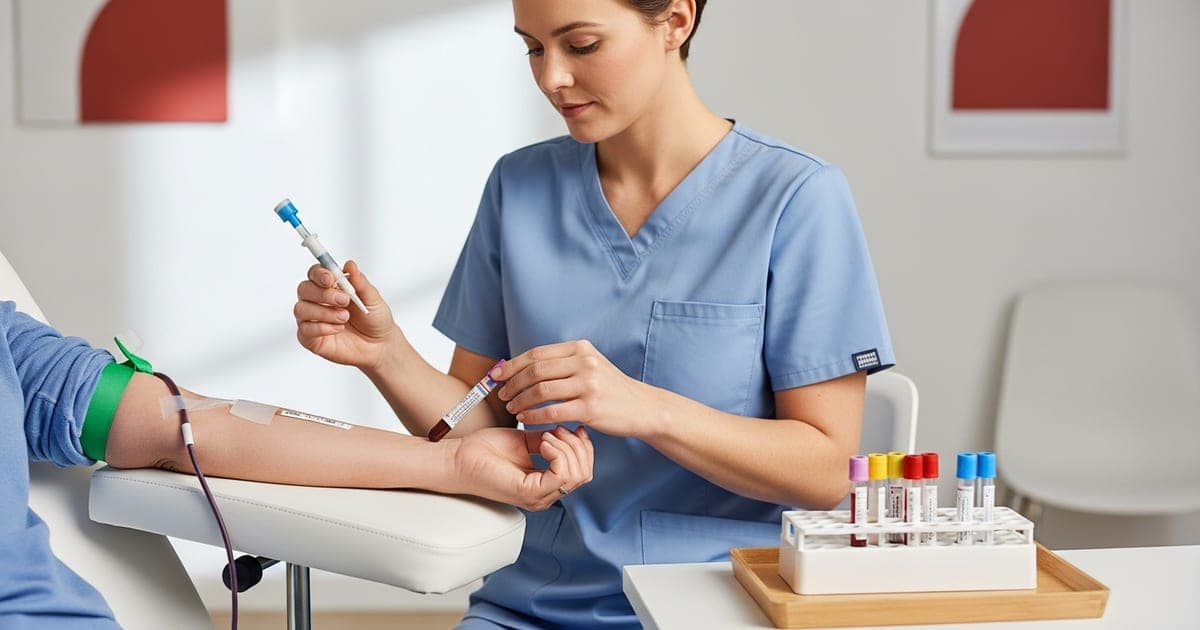
Hereditary hemochromatosis is treated with a procedure that sounds simple but requires clinical precision: therapeutic phlebotomy. A specific volume of blood is removed at regular intervals, draining excess iron from the body before it can accumulate in the liver, heart, and joints. For most patients, this means months of weekly draws during depletion, followed by years of maintenance draws on a recurring schedule.
Mobile therapeutic phlebotomy — having a certified phlebotomist come to your home instead of visiting a clinic or infusion center — is a legitimate option for most hemochromatosis patients. Here is what to know before making the switch.
What is therapeutic phlebotomy for hemochromatosis?
Hereditary hemochromatosis (HHC) causes the body to absorb too much iron from food. Over time, iron accumulates in organs — the liver most commonly, but also the heart, pancreas, and joints. If untreated, this leads to cirrhosis, cardiomyopathy, arthritis, and diabetes.
Therapeutic phlebotomy is the standard treatment. Each draw removes approximately 450–500 mL of blood, which contains roughly 200–250 mg of iron. The goal is to bring ferritin below your physician's target (often below 50 ng/mL, though targets vary) and maintain it there.
Treatment has two phases:
- Depletion phase: Weekly or bi-weekly draws until ferritin reaches target. Depending on initial iron burden, this takes 3 months to over a year.
- Maintenance phase: Once ferritin is controlled, draws shift to every 2–4 months to prevent re-accumulation. Most HHC patients require lifelong maintenance.
Is home therapeutic phlebotomy safe for hemochromatosis?
Yes — when performed by a nationally certified phlebotomist following your physician's order. The clinical procedure is identical whether performed at a hospital outpatient department, infusion center, or your home. The phlebotomist collects the ordered volume, documents the procedure, and routes any concurrent labs (ferritin, CBC) to your reference lab.
Your physician must write the order specifying volume, frequency, and any monitoring labs. Speedy Sticks performs therapeutic phlebotomy only on valid physician orders — not as a self-referred service.
What to expect from an at-home therapeutic phlebotomy visit
A home therapeutic phlebotomy visit for hemochromatosis typically takes 30–60 minutes:
- Order review: The phlebotomist reviews your physician's order — volume, any concurrent labs, and special instructions.
- Patient identification: Identity confirmed against the order using two identifiers (name + date of birth).
- Hydration check: You should be well-hydrated before the visit — drink at least 16–24 oz of water in the hours before. This is especially important for higher-volume draws; dehydration makes the draw slower and increases the risk of vasovagal symptoms.
- The draw: Standard venipuncture. For therapeutic volumes, the draw may take longer than a routine diagnostic draw. Your phlebotomist monitors you throughout.
- Concurrent labs: If your order includes monitoring labs (ferritin, CBC, transferrin saturation), these are collected at the same visit using additional tubes.
- Post-draw: Pressure applied, site bandaged. Rest for a few minutes before standing. Light snack recommended.
- Specimen routing: Concurrent lab specimens are labeled, documented, and transported to your designated reference lab.
Concurrent labs at the same visit
Your hematologist or gastroenterologist likely monitors your ferritin, CBC, and transferrin saturation on a regular schedule. Speedy Sticks collects these at the same therapeutic phlebotomy visit — no second appointment needed. The monitoring labs are drawn in standard diagnostic tubes after the therapeutic volume is collected, labeled at bedside, and routed to your lab.
This is one of the practical advantages of home draws: your provider gets the therapeutic record and the monitoring results from a single visit without you making a separate lab trip.
How home draws compare to infusion centers and hospital outpatient
Therapeutic phlebotomy is commonly performed at:
- Hospital outpatient departments
- Hematology or gastroenterology clinic offices
- Infusion centers (often as a "non-infusion" procedure alongside chemotherapy patients)
- At-home through a mobile phlebotomy service
The clinical outcome is the same regardless of setting. The practical differences:
- Frequency makes travel significant: During depletion, you may be drawing weekly. Twelve to fifty-two trips to a facility over a year is a real burden — particularly if the facility has limited non-infusion slots and requires you to wait in an infusion center environment.
- Infusion center billing: Hospital outpatient and infusion center fees can be substantially higher than physician office or mobile collection fees, depending on your insurance plan's facility vs. non-facility cost sharing.
- Scheduling flexibility: Infusion centers often have limited slots for therapeutic phlebotomy (which takes a chair but no infusion setup). Mobile phlebotomy scheduling is more flexible, including early morning and weekend windows.
Who is a good candidate for home therapeutic phlebotomy?
Home therapeutic phlebotomy is appropriate for most hemochromatosis patients in both the depletion and maintenance phases. It works especially well for:
- Patients in active depletion who draw weekly or bi-weekly — the cumulative time savings are substantial
- Patients with mobility limitations or transportation challenges
- Patients whose infusion center has limited non-infusion availability
- Patients in maintenance phase who draw every 2–4 months and prefer home convenience
Home therapeutic phlebotomy is not appropriate for patients with:
- Cardiovascular instability requiring immediate medical supervision
- Very high draw volumes that require clinical monitoring and IV access support
- Active co-morbidities that may require emergency intervention during the draw
Confirm with your hematologist whether home draws are appropriate for your specific clinical situation before switching from a facility-based protocol.
How to switch from a clinic to mobile therapeutic phlebotomy
- Confirm with your physician that home therapeutic phlebotomy is appropriate and get an updated order specifying volume, frequency, concurrent labs, and any special instructions.
- Book your first visit with Speedy Sticks, specifying therapeutic phlebotomy and your reference lab for concurrent monitoring draws.
- Prepare: Hydrate well the morning of your appointment. Have your order and ID ready. Have a light snack for after.
- Share results with your provider via the same lab portal as before — concurrent labs go to the same reference lab and appear in your provider's system.
Need blood drawn at home?
Speedy Sticks sends a certified phlebotomist to your door — no clinic visit required. Book online with your lab order.
Book a Mobile Blood Draw →