For telehealth, clinics, employers & research teams
Capillary Blood Collection Programs, With a Phlebotomist Behind Every Kit
Speedy Sticks runs your capillary blood collection program end to end. We supply the at-home blood collection devices, a partner CLIA-certified lab processes every sample, and if you don't have an ordering physician, lab orders are arranged through our partner provider group. Patients collect at home. And because we're a nationwide mobile phlebotomy company, a sample that fails isn't a dead end: we send a phlebotomist.
At a glance
- What it is
- A turnkey capillary blood collection program for organizations, run by Speedy Sticks
- How patients collect
- At home, with an upper-arm capillary device we supply
- Lab processing
- A partner CLIA-certified laboratory
- Lab orders
- Your clinicians, or our partner provider group, which can also order any test on the Labcorp or Quest menu
- If a sample fails
- A certified mobile phlebotomist visits for a capillary or venous redraw
- Who it's for
- Telehealth, clinics, employers, and research teams, nationwide in the US
Prefer to call? 347-292-9570
Updated
What's included in a capillary collection program
Most capillary programs make you stitch together a device vendor, a lab, and a physician network, then hope the samples come back usable. We provide all of it, and we cover the part a kit company can't: a person to fix a failed collection.
At-home blood collection devices
We supply the upper-arm capillary devices your patients collect with, along with the instructions and return packaging that get each sample to the lab.
Lab processing
A partner CLIA-certified laboratory processes every sample and reports the results.
Physician orders, when you need them
Your clinicians can order, or lab orders are arranged through our partner provider group. Speedy Sticks doesn't write orders itself.
Phlebotomist backup
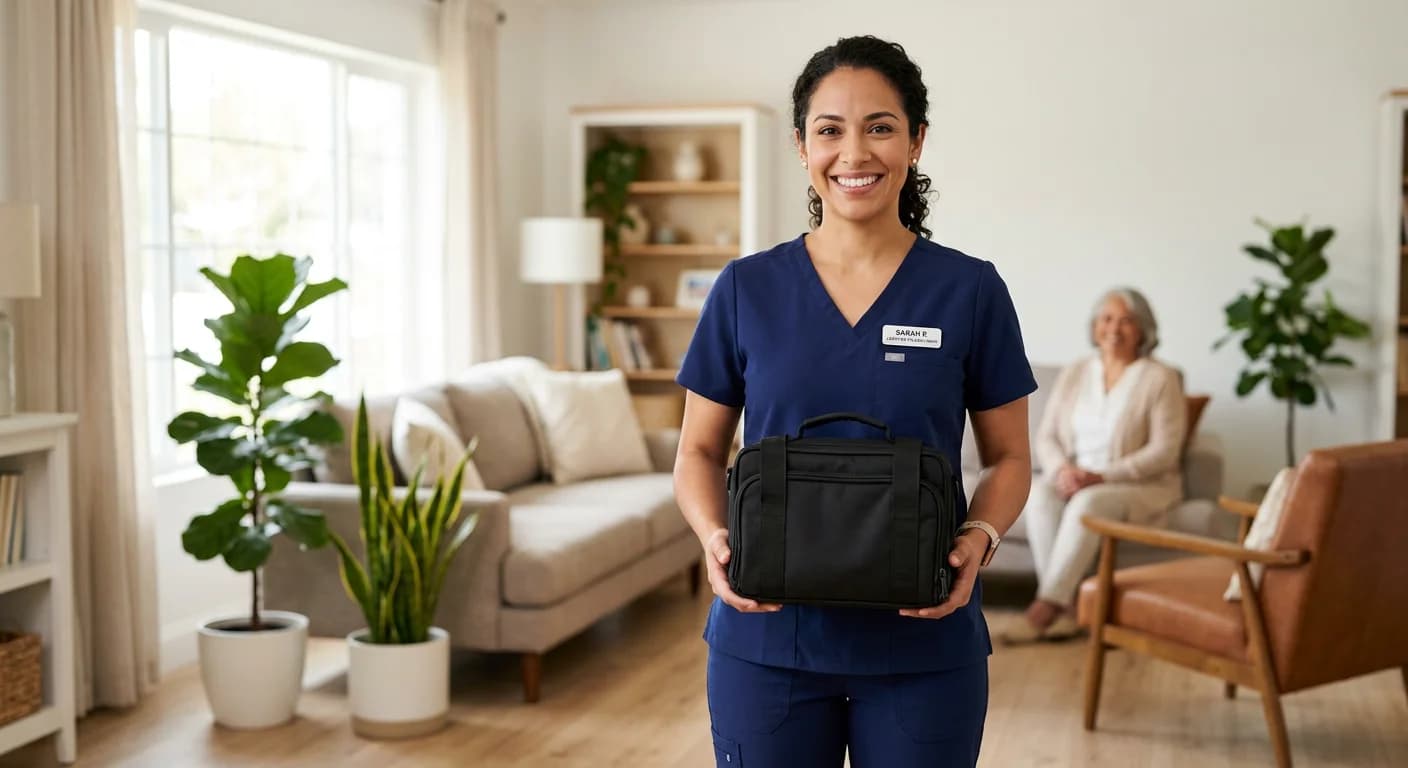
If a patient can't collect a usable sample, or the lab can't run it, we send a certified mobile phlebotomist for a capillary or venous redraw.
How a capillary collection program works
- 1
Order
Your clinician orders the tests, or orders are arranged through our partner provider group.
- 2
Device ships
The patient receives the upper-arm device, instructions, and return packaging.
- 3
Collect at home
The patient applies the device to the upper arm and sends the sample back.
- 4
Lab processing
Our partner CLIA-certified lab checks the sample and runs the tests.
- 5
Results
The lab reports results to the ordering clinician.
If a sample fails
A phlebotomist visits for a redraw
Can't collect at home, or the lab can't run the sample? A certified Speedy Sticks phlebotomist does a capillary or venous redraw, the new sample goes to the lab, and the program continues.
The backup is a phlebotomist, not another kit
Capillary programs live or die on sample quality. A self-collected sample can come up short, clot, or arrive in a condition the lab can't run, and some patients can't complete the collection at all. The usual fix is to mail another kit and wait. Each round trip costs time, and some patients never finish.
We fix it with a person. Speedy Sticks is a nationwide mobile phlebotomy company, so when a sample fails, a certified phlebotomist visits the patient for a capillary or venous redraw. Your patients stay in the program, and one company is accountable for the whole collection.
Who runs capillary collection programs with us
Telehealth & digital health
Add lab testing to virtual care or a membership program without building a draw-site network. Patients collect at home, and the ones who can't still get tested.
Telehealth programs →Clinics & physician practices
Keep patients on their monitoring schedule between visits, without sending them to a lab. Your clinicians order; we handle collection and processing.
Programs for practices →Employers & wellness programs
Reach remote and distributed employees with at-home collection. On-site biometric screening events stay venous, so both can run as one program.
Biometric screening →Research & clinical trials
Sample participants at home on the protocol's schedule, with a phlebotomist for visits that need a venous draw.
Research & CRO programs →Capillary vs. venous blood: use each where it fits
Most companies sell one or the other. We run both, so a program can start with capillary collection and move individual patients or tests to a venous draw when they need it.
| Factor | Capillary program | Mobile venous draw |
|---|---|---|
| Who collects | The patient, at home, with an upper-arm device | A certified phlebotomist, at home, at work, or on-site |
| Sample | Small-volume capillary blood | Full venous tubes |
| Test menu | Tests our partner lab has validated for capillary blood | Any test on the Labcorp or Quest menu |
| Scheduling | No appointment: the patient collects once the device arrives | A booked visit at the patient's chosen time and place |
| Best for | Recurring monitoring, large or distributed populations, remote participants | Broad or specialty panels, larger volumes, patients who can't self-collect |
We confirm your test list with our partner lab before launch: tests validated for capillary blood run from the device, and anything else goes to a venous draw from the same team, with any test on the Labcorp or Quest menu available. For a deeper look, see mobile phlebotomy vs. at-home test kits.
Lab orders, processing, and results
Orders. Every test needs an order. If your clinicians already order, we run the program against your orders. If you don't have an ordering physician, lab orders are arranged nationwide through our partner provider group. Capillary tests go to our partner CLIA-certified lab, and tests that need a venous draw can be routed to Labcorp or Quest, including out-of-pocket orders for anything on their menus. Speedy Sticks doesn't write the orders itself.
Processing. A partner CLIA-certified laboratory receives and processes every capillary sample.
Results. The lab reports results to the ordering clinician. Results are protected health information; see our privacy policy and SpeedySafe Protocol.

Capillary collection program cost
Pricing depends on your test menu, how many patients you test, how often, and whether you need physician ordering. Tell us about your program and we'll send a quote.
Related programs
Capillary blood collection FAQs
- What is capillary blood collection?
- Capillary blood collection takes a small blood sample from the capillaries, the tiny blood vessels just under the skin, instead of from a vein. The skin is punctured with a lancet, traditionally on a fingertip or heel, or with a device applied to the upper arm, and the blood is collected into a small tube or onto a card for lab testing.
- What is a capillary blood collection program?
- A capillary blood collection program lets patients give a small blood sample from the capillaries near the skin's surface, usually at home, instead of visiting a draw site for a venous blood draw. Someone supplies the collection device, a lab processes the sample, and a clinician orders the tests. Speedy Sticks provides all three, plus a mobile phlebotomist when a sample fails.
- What is a capillary blood test?
- A capillary blood test is a lab test run on a small blood sample from the capillaries, the tiny vessels near the skin's surface, instead of from a vein. In our programs, patients collect the sample at home with an upper-arm device, and our partner CLIA-certified lab runs the tests that are validated for capillary blood.
- What is an at-home blood collection kit?
- Everything a patient needs to give a blood sample without visiting a lab: the collection device, instructions, and packaging to send the sample back. In a Speedy Sticks program, the kit uses an upper-arm capillary device, the sample goes to our partner CLIA-certified lab, and if it fails, a phlebotomist visits for a redraw.
- What does Speedy Sticks provide in a capillary collection program?
- The upper-arm collection devices, processing at a partner CLIA-certified laboratory, lab orders through our partner provider group when you don't have your own ordering physician, and a certified mobile phlebotomist for redraws when a patient can't collect a usable sample.
- Is this a fingerstick test?
- No. Fingerstick and upper-arm devices both collect capillary blood, but our programs use a device applied to the upper arm rather than a lancet on the fingertip.
- What happens if a sample fails or a patient can't collect it?
- We send a phlebotomist. If a patient can't collect a usable sample, or the lab can't run the one it receives, a certified Speedy Sticks phlebotomist visits the patient for a capillary or venous redraw, so the patient stays in the program instead of waiting on a replacement kit.
- Do we need our own physician to order the tests?
- No. If you don't have an ordering physician, lab orders are arranged nationwide through our partner provider group; Speedy Sticks doesn't write the orders itself. For tests that need a venous draw, the group can order anything on the Labcorp or Quest menu, including out-of-pocket (self-pay) tests. If your clinicians already order, we run the program against your orders.
- Which lab processes the samples?
- A partner CLIA-certified laboratory processes every capillary sample and reports the results to the ordering clinician.
- Which tests can run on a capillary sample?
- Tests our partner lab has validated for capillary blood. Not every test is, and some need more blood than a capillary sample provides. Share your test list and we'll confirm which run on capillary blood and which need a venous draw. Venous draws are done by our phlebotomists and can include anything on the Labcorp or Quest menu.
- Is capillary blood as accurate as a venous draw?
- It depends on the test. Some tests are well validated on capillary blood; others aren't, or can read differently from a venous sample. That's why we confirm your test list with our partner lab and route anything that isn't validated for capillary collection to a venous draw.Mobile phlebotomy vs. at-home test kits
- What are the advantages and disadvantages of capillary blood collection?
- Advantages: it needs only a small amount of blood, patients can collect at home without a phlebotomist, and frequent testing is easier. Disadvantages: fewer tests are validated for capillary samples, the small volume limits how many tests one sample covers, samples can be rejected for being too small, clotted, or hemolyzed, and some results can differ from venous values. Our programs cover the disadvantages with phlebotomist redraws and venous draws for tests that need them.
- Who uses capillary collection programs?
- Telehealth and digital health companies, clinics and physician practices, employers and wellness programs, and research teams running decentralized studies: anyone who needs lab results from patients who can't easily get to a draw site.
- Where is the program available?
- Speedy Sticks operates nationwide through a certified phlebotomist network, with the strongest density in major metros. Tell us where your patients are and we'll confirm coverage for your program, including phlebotomist redraws.
- How much does a capillary collection program cost?
- It depends on your test menu, how many patients you test, how often, and whether you need physician ordering. Tell us about your program and we'll send a quote.
- How do we get started?
- Tell us who you need to test, which tests, how often, and whether you need physician ordering, through the program inquiry form or by calling 347-292-9570. We'll come back with a program plan and a quote.
Plan your capillary collection program
Tell us who you need to test, which tests, how often, and whether you need physician ordering. We'll send a program plan and a quote.
Or call 347-292-9570