
Your blood is never actually blue — even venous blood, which is darker than arterial blood, is still some shade of red (see our explainer on why blood looks almost black in a draw tube). The blue appearance of veins under your skin is an optical effect, not a reflection of the blood's real color.
Why veins look blue: it's about light, not blood color
Skin and the tissue layers above a vein absorb and scatter different wavelengths of light differently. Red light has a longer wavelength and penetrates deeper into tissue before being absorbed by blood, while blue light has a shorter wavelength and scatters back toward the surface before it can reach the same depth. Veins typically sit deep enough under the skin — often several millimeters — that mostly the shorter, blue-shifted wavelengths bounce back to your eyes, making the vein look blue even though the blood inside is red. This subsurface scattering effect has been studied and confirmed in vision-science and dermatology research; it is one of the more counterintuitive but well-established facts of human physiology.
Why vein color varies from person to person
How blue or green a vein appears depends on several factors:
- Skin tone and thickness — lighter, thinner skin tends to show veins more distinctly, sometimes with more green than blue, because less melanin is available to filter the scattered light.
- Vein depth — veins closer to the surface tend to look more green; deeper veins tend to look more blue, because the light has to travel and scatter through more tissue.
- Body fat percentage — a thinner layer of subcutaneous fat brings veins closer to the surface and makes them more visible overall.
- Hydration and temperature — well-hydrated, warm tissue tends to make veins plumper and easier to see, which is one reason phlebotomists sometimes apply a warm compress before a draw.
- Age — skin tends to thin with age, which can make veins appear more prominent and sometimes darker in color.
A common myth: vein color and oxygen levels
A persistent misconception is that a vein looks blue because the blood inside it is low on oxygen and therefore “actually blue.” This is not accurate — deoxygenated blood is a darker red, never blue, at any oxygen saturation level compatible with life. The blue you see is entirely a product of how light interacts with skin, not a chemical property of the blood itself.
Why vein visibility matters for a blood draw
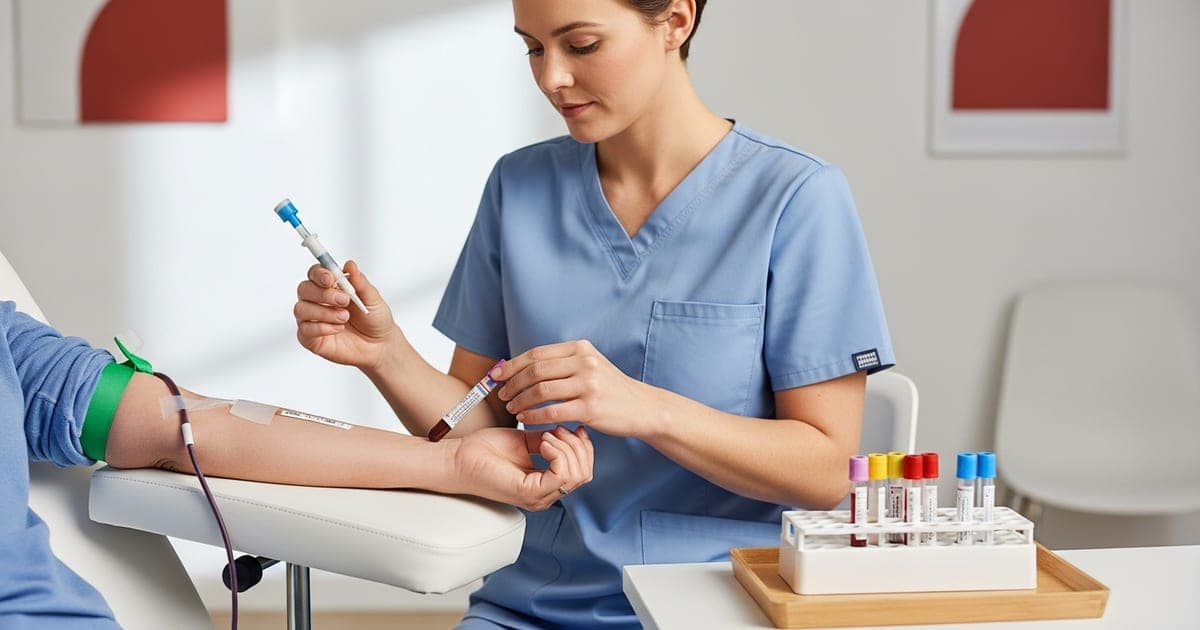
Phlebotomists rely on being able to see and feel a vein to select the best site for a draw — usually the median cubital vein in the inner elbow, chosen for its size and stability. Good hydration, a properly applied tourniquet, and sometimes gravity (letting the arm hang down before the draw) all help make veins more visible and easier to access. If you have historically been a “hard stick” because your veins are difficult to see or feel, a mobile phlebotomist can use techniques like a warm compress, an alternate site, or a smaller-gauge needle (a butterfly needle, discussed in our guide to avoiding blown veins) to improve success on the first attempt.
Techniques phlebotomists use to make veins easier to see
When a vein is hard to see or feel, phlebotomists have several standard, evidence-based techniques available before resorting to a different site:
- Warm compress — applying gentle warmth for two to three minutes causes superficial veins to dilate and become more visible and easier to palpate.
- Proper tourniquet application — placed a few inches above the intended draw site and left on no more than about a minute, a correctly applied tourniquet fills the vein and makes it stand out more clearly.
- Gravity — letting the arm hang down for a minute before the draw allows blood to pool and veins to fill more fully.
- Fist pumping — gently clenching and releasing a fist a few times can help bring veins closer to the surface, though this should be stopped once the tourniquet is on and the site is being prepared, to avoid affecting certain lab values.
- Vein visualization devices — some mobile phlebotomy visits, particularly for patients with historically difficult veins, use small handheld infrared devices that project a map of visible veins directly onto the skin.
Does vein color indicate vein health?
Vein color by itself is not a meaningful indicator of vein health. What actually matters clinically is whether a vein feels bouncy and resilient under a gentle press (a sign of a healthy, accessible vein) versus hard, cord-like, or scarred (which can indicate previous trauma from repeated draws, a condition called sclerosis, and may prompt a phlebotomist to choose a different site). A vein that looks more green than blue, or barely visible at all under the skin, can still be perfectly healthy and easy to access once located by feel rather than sight alone.
Need blood drawn at home?
Speedy Sticks sends a certified phlebotomist to your door — no clinic visit required. Book online with your lab order.
Book a Mobile Blood Draw →