
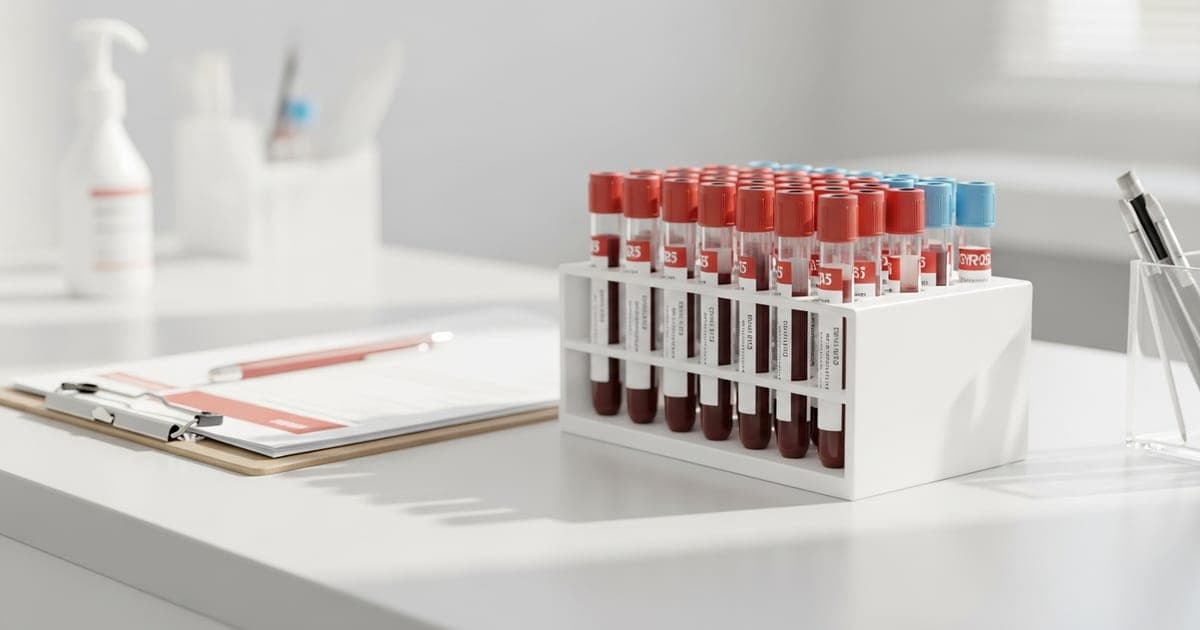
What is Dried Blood Spot?
A Dried Blood Spot is a technique used in medical and scientific research to collect small samples of blood for testing. It involves taking a small amount of blood from a finger prick or heel prick and placing it onto a filter paper or special collection card, which is then allowed to dry. The dried blood spot can be stored at room temperature for later analysis, making it a convenient and cost-effective method for collecting and transporting blood samples. Dried Blood Spot is commonly used for screening newborns for a variety of genetic and metabolic disorders, as well as for monitoring drug levels in patients. It has also been used in research studies to analyze biomarkers and infectious diseases.A Convenient and Cost-Effective Method for Blood Sample Collection
Blood is a critical fluid in the human body that carries oxygen, nutrients, and waste products throughout the body. Blood samples are used in medical and scientific research for a wide range of purposes, from screening for genetic and metabolic disorders to monitoring drug levels in patients. However, traditional methods of blood collection, such as venipuncture, can be invasive, uncomfortable, and require specialized equipment for sample collection and storage.Advantages of Dried Blood Spot Sample Collection
Dried Blood Spot sample collection offers several advantages, including:- Easy collection: Dried Blood Spot collection is minimally invasive and can be performed by non-specialists with minimal training, making it an ideal sampling technique in resource-limited settings.
- Convenient storage and transport: Dried Blood Spot samples are lightweight, compact, and stable at room temperature, making them easy to store and transport. This is especially important in remote areas where access to refrigeration or specialized transport systems may be limited.
- Cost-effective: Dried Blood Spot sampling eliminates the need for expensive equipment and specialized personnel required for traditional blood sampling methods, reducing the cost of sample collection and analysis.
- Small sample volume: Dried Blood Spot sampling requires only a small volume of blood (usually a few drops), which can be especially important when working with vulnerable populations or pediatric patients.
- Wide range of analytes: Dried Blood Spot samples can be used to analyze various blood-borne analytes, including proteins, nucleic acids, and small molecules, making them versatile for a wide range of applications in medical research and diagnostics.
Challenges of Dried Blood Spot Sample Collection
Dried Blood Spot sample collection is a useful method for collecting and analyzing blood samples, but it also presents some challenges. Here are some of the main challenges associated with dried blood spot sample collection:- Reduced sensitivity: The small sample size used in dried blood spot may result in reduced sensitivity for some tests compared to traditional blood collection methods. This can lead to false-negative or false-positive results.
- Inconsistent sample quality: The quality of the dried blood spot sample depends on the technique used for collecting and processing the sample. Variations in sample collection and processing can result in inconsistent sample quality and affect the accuracy of test results.
- Stability issues: While Dried Blood Spot samples are generally stable at room temperature for long periods of time, factors such as humidity and exposure to sunlight can affect the stability of the samples. This can lead to degradation of the sample and inaccurate test results.
- Difficulty in handling viscous samples: Certain types of blood, such as those with high lipid content, can be difficult to handle using Dried Blood Spot. The viscosity of these samples can make it challenging to obtain a consistent sample size and quality.
- Lack of standardization: There is currently a lack of standardization in Dried Blood Spot sample collection and processing protocols, which can lead to variations in sample quality and affect the accuracy of test results.
Limitations of Dried Blood Spot Sample Collection
Dried Blood Spot sample collection also has some limitations, including:- Hematocrit effect: The hematocrit (the proportion of red blood cells in the blood) can affect the accuracy and precision of Dried Blood Spot measurements. The viscosity of the blood increases as the hematocrit increases, which can lead to uneven distribution of the sample on the filter paper and affect the analyte concentration.
- Matrix effects: The filter paper used in Dried Blood Spot collection can contain impurities that may interfere with the accuracy of the analytical results. Additionally, the presence of certain compounds in the blood, such as lipids or drugs, can also interfere with the measurement of other analytes.
- Sample stability: Although Dried Blood Spot samples are stable at room temperature, exposure to humidity or extreme temperatures can affect the stability of some analytes, leading to inaccurate results.
- Sample size: Although the small sample size required for Dried Blood Spot collection can be an advantage, it can also be a limitation for some applications that require a larger volume of blood for analysis.
- Sample representativeness: The analyte concentration in Dried Blood Spot samples may not accurately reflect the concentration in whole blood or other body fluids, as the filter paper may selectively retain certain components or exclude others.
Solutions to Address Limitations of Dried Blood Spot Sample Collection
Dried Blood Spot sample collection is a convenient and cost-effective method for collecting blood samples for various analyses. However, there are some limitations associated with Dried Blood Spot sample collection that can affect the quality and accuracy of the samples. Here are some solutions to address these limitations:- Improve the consistency of blood volume: The amount of blood absorbed by the filter paper can vary depending on the pressure applied during collection, the size of the blood droplet, and the consistency of the filter paper. To address this issue, standardized protocols should be developed to ensure consistent blood volume is collected and applied to the filter paper.
- Improve the homogeneity of sample: In some cases, the distribution of analytes within the Dried Blood Spot sample may be heterogeneous, resulting in inconsistent results. To address this, a thorough mixing of the blood sample with a buffer solution can be done before spotting onto filter paper. Alternatively, a larger blood spot can be collected and then divided into smaller spots for analysis.
- Address Hematocrit Interference: The hematocrit value can affect the accuracy of the Dried Blood Spot analysis, as it can alter the viscosity of the blood and affect the absorption of the analyte onto the filter paper. One solution to address this issue is to collect a larger blood spot and use an automated sample preparation system to normalize the hematocrit value. This will help to ensure consistent and accurate results.
- Control the ambient temperature and humidity: The stability and integrity of the analytes in the Dried Blood Spot samples can be affected by temperature and humidity. To minimize this effect, the samples should be stored in an airtight container at a controlled temperature and humidity until they are analyzed.
- Validate the analytical methods: It is important to validate the analytical methods used for Dried Blood Spot sample analysis, particularly for complex or sensitive assays. This includes the development of standardized protocols for sample preparation, analytical validation, and quality control. Regular monitoring and calibration of instruments can also help to ensure accurate results.
Applications of Dried Blood Spot Sample Collection
Dried blood spot sample collection has several applications in medical and scientific research, including:- Neonatal screening: Dried Blood Spot is commonly used for newborn screening for metabolic disorders, hemoglobinopathies, and other genetic conditions. It is a convenient and minimally invasive method for collecting blood samples from newborns.
- Infectious disease testing: Dried Blood Spot can be used to test for infectious diseases, such as HIV, hepatitis C, and malaria. It has been particularly useful for testing in resource-limited settings where traditional blood collection methods may not be feasible.
- Monitoring drug levels: Dried Blood Spot can be used to monitor drug levels in patients, particularly in situations where frequent blood draws are necessary. This can help ensure that patients receive the appropriate dose of medication.
- Biomarker analysis: Dried Blood Spot can be used to analyze biomarkers in blood samples, which can provide important information about disease diagnosis, progression, and treatment.
- Forensic testing: Dried Blood Spot has been used in forensic testing to analyze blood samples for DNA, drugs, and other substances. It is a convenient and non-invasive method for collecting blood samples from suspects.
The Future of Dried Blood Spot Sample Collection
Dried Blood Spot sample collection has gained popularity as a convenient and cost-effective method for collecting and analyzing blood samples in a variety of research settings. With ongoing advancements in technology and research, the future of Dried Blood Spot sample collection is promising. One area of growth is in the development of new assays and techniques that can optimize the use of Dried Blood Spot samples. For example, new methods are being developed for processing and analyzing Dried Blood Spot samples that can increase the sensitivity and accuracy of tests, as well as allow for the analysis of a wider range of biomarkers. Another area of growth is in the use of Dried Blood Spot sample collection in clinical trials. Dried Blood Spot has the potential to make clinical trials more accessible and efficient, as it can eliminate the need for patients to travel to a clinical site for blood draws. This can increase patient participation rates and reduce the costs associated with clinical trials. Finally, Dried Blood Spot sample collection is being explored as a tool for population-level screening and monitoring of infectious diseases. DBS has the potential to provide a convenient and cost-effective method for collecting blood samples from large populations, allowing for the early detection and monitoring of infectious diseases.Examples of Dried Blood Spot Sample Collection in Medical Research and Public Health
- HIV surveillance: Dried Blood Spot has been used extensively for HIV surveillance, particularly in sub-Saharan Africa where traditional blood collection methods can be logistically challenging. DBS samples have been used to estimate HIV prevalence, incidence, and transmission rates, as well as to monitor the effectiveness of HIV prevention and treatment programs.
- Newborn screening: Dried Blood Spot has been used for decades as a method for screening newborns for a variety of conditions, including metabolic disorders, congenital hypothyroidism, and hemoglobinopathies.
- Monitoring drug levels: Dried Blood Spot is increasingly being used as a method for monitoring drug levels in patients, particularly in resource-limited settings where traditional blood collection methods may not be available. For example, DBS samples have been used to monitor antiretroviral therapy levels in patients with HIV.
- Biomarker analysis: Dried Blood Spot is a useful tool for analyzing biomarkers, such as proteins, lipids, and nucleic acids. For example, DBS samples have been used to analyze inflammatory biomarkers in patients with cardiovascular disease.
- Environmental monitoring: Dried Blood Spot has been used for monitoring exposure to environmental toxins, such as pesticides and heavy metals, in a variety of populations, including agricultural workers and children living near industrial sites.
For tests requiring a standard venipuncture draw rather than a dried blood spot, a mobile phlebotomist can collect at your home with full chain-of-custody compliance.
Sources and further reading
Need a Standard Venipuncture Draw? Done From Home.
For tests requiring a full venous blood draw rather than a dried spot, Speedy Sticks sends a certified phlebotomist to your home with full chain-of-custody compliance.
Book a visit →