Employer and DOT drug testing covers millions of workers annually. If you have been told you need a drug test — whether for a new job, a random selection, or post-accident — this guide walks through exactly what to expect at every step, what gets tested, and how results work.
Types of workplace drug tests
Not all drug tests are the same. The type ordered depends on your employer, your industry, and the regulatory framework that applies to your role.
- Urine drug test — the most common format. Specimen collected at a certified collection site, split into a primary and split sample, and sent to a SAMHSA-certified lab for analysis. Results in 1–3 business days for negative; 2–5 days if flagged for confirmatory GC-MS testing.
- Hair follicle drug test — 1.5 inches of hair collected from the crown of the head, which represents approximately 90 days of drug use history. Cannot detect very recent use (last 7–10 days). Harder to adulterate than urine. Results in 2–5 business days.
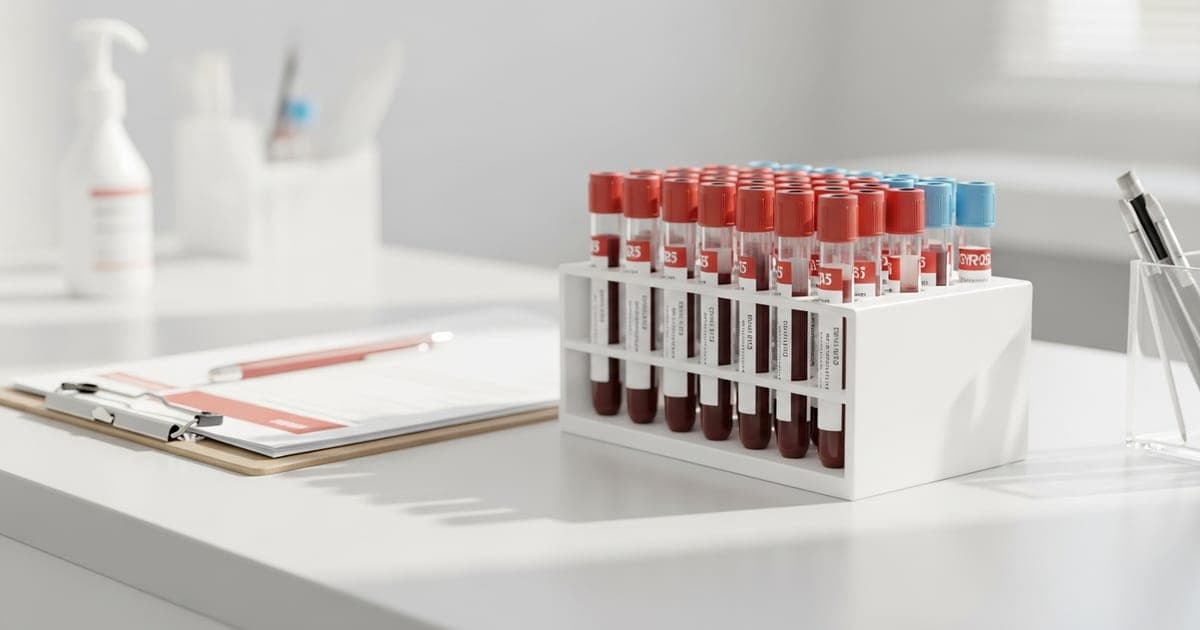
- Blood drug test — detects actual drug concentration in blood at the time of collection. Narrow detection window (hours to days depending on the substance). Used primarily in post-accident investigations when a precise use timeline matters. Can be collected by a mobile phlebotomist.
- Oral fluid (saliva) test — swab collected on-site; detects recent use (typically within 24–48 hours). Increasingly used for reasonable-suspicion and post-accident testing. Harder to adulterate than urine.
DOT vs. non-DOT drug testing
This distinction matters because the rules, panel requirements, and collection process are different.
DOT drug testing applies to safety-sensitive transportation employees — commercial truck drivers (FMCSA), airline pilots (FAA), railroad workers (FRA), transit operators (FTA), and pipeline workers (PHMSA). DOT testing is strictly regulated under 49 CFR Part 40 and requires:
- Collection at a DOT-authorized collection site by a trained Collector
- A DOT-specific 5-panel urine test (see panel details below)
- Testing at a SAMHSA-certified laboratory
- Review of all non-negative results by a licensed Medical Review Officer (MRO) before results are released
- A Federal Custody and Control Form (CCF) for chain-of-custody documentation
Non-DOT testing covers all other employer-mandated testing — construction, healthcare, retail, office environments, and any employer who tests voluntarily. Non-DOT programs have more flexibility: employers can choose the panel type, specimen type, and cutoff levels. Mobile collection is permitted for blood draws and, depending on state rules, some urine collections.
What does a 5-panel drug test screen for?
The DOT 5-panel is the federal standard for transportation workers. It tests for:
- Marijuana (THC) — cutoff: 50 ng/mL initial screen; 15 ng/mL confirmation. Note: a valid prescription or recreational legality in your state does not excuse a positive DOT result.
- Cocaine (COC) — screens for benzoylecgonine, the primary cocaine metabolite. Cutoff: 150 ng/mL initial; 100 ng/mL confirmation.
- Opiates (OPI/OPI2000) — morphine and codeine at 2,000 ng/mL. The panel also tests separately for heroin (6-AM) and semi-synthetic opioids (oxycodone, oxymorphone, hydrocodone, hydromorphone) at 100 ng/mL.
- Amphetamines (AMP) — amphetamine and methamphetamine at 500 ng/mL initial; 250 ng/mL confirmation. MDMA (Ecstasy) is also tested.
- Phencyclidine (PCP) — cutoff: 25 ng/mL initial; 25 ng/mL confirmation.
Non-DOT 10-panel tests add barbiturates, benzodiazepines, methadone, propoxyphene, and methaqualone to the standard 5-panel. Expanded panels can include synthetic opioids, fentanyl, kratom, and others depending on employer policy.
When is a drug test required?
DOT-regulated employers must test under six specific circumstances:
- Pre-employment — before a safety-sensitive employee performs any covered function. Must be negative before the employee starts.
- Random — unannounced, computer-generated selection throughout the year. DOT sets minimum annual testing rates by mode (e.g., FMCSA requires at least 50% of drivers for drug testing annually).
- Post-accident — after any qualifying accident. For FMCSA: any fatality, or when a citation is issued and there is injury requiring medical treatment or vehicle disabling damage. Must be completed within 8 hours (alcohol) and 32 hours (drugs) of the accident.
- Reasonable suspicion — when a trained supervisor observes specific, contemporaneous, articulable signs of drug or alcohol use. Two supervisors must document the observation in writing.
- Return-to-duty — after a violation, before returning to safety-sensitive functions. Employee must pass a return-to-duty test following completion of SAP-recommended evaluation and education/treatment.
- Follow-up — a minimum of 6 unannounced tests in the first 12 months after return-to-duty, continuing for up to 60 months at the SAP's discretion.
How to prepare for your drug test
- Know your test type before arriving. Confirm with your employer or MRO whether it is DOT or non-DOT, the panel size, and the specimen type (urine, hair, blood, or oral fluid).
- Bring valid photo ID. A government-issued ID (driver's license, passport, or state ID) is required at collection. The Collector cannot accept a test without verifying identity.
- Disclose prescription medications to the MRO — not the Collector. The Collector has no authority to accept medication explanations. If a test returns non-negative, the MRO will contact you confidentially to discuss any legitimate medical explanation before reporting to the employer.
- Hydrate normally — do not over-hydrate. Drinking excessive water before a urine test can dilute the specimen below the valid creatinine threshold, resulting in a cancelled test and requirement to retest under direct observation.
- Do not attempt to substitute or adulterate the specimen. Specimens are tested for validity (temperature, creatinine, pH, oxidants). A substituted or adulterated specimen is reported to the employer as a refusal to test — which carries the same consequences as a positive result.
How long do results take?
- Urine (negative result) — 1–3 business days from collection to employer notification.
- Urine (non-negative, sent for GC-MS confirmation) — add 1–2 days for confirmation, then MRO review time. Total: 3–7 business days.
- Hair follicle — 2–5 business days after specimen receipt at the lab.
- Blood — varies; typically 1–3 business days for confirmatory results.
What happens if you test positive?
A confirmed positive DOT result is reported by the MRO to the Designated Employer Representative (DER). The employee is immediately removed from safety-sensitive functions. The employee must then:
- Be evaluated by a DOT-qualified Substance Abuse Professional (SAP)
- Complete all SAP-recommended education and/or treatment
- Pass a return-to-duty test
- Complete all follow-up testing as directed by the SAP
The positive result is also added to the Federal Motor Carrier Safety Administration (FMCSA) Drug and Alcohol Clearinghouse for CDL holders — a permanent federal database checked at every new hire and annually by employers.
Can Speedy Sticks help with drug testing?
Speedy Sticks provides mobile blood draws, which are used for blood-based drug testing — including post-accident panels where blood concentration at the time of the incident is clinically relevant. For standard urine DOT collections, Speedy Sticks routes clients to a DOT-authorized collection site and certified lab. Contact us to discuss the right collection pathway for your situation.