
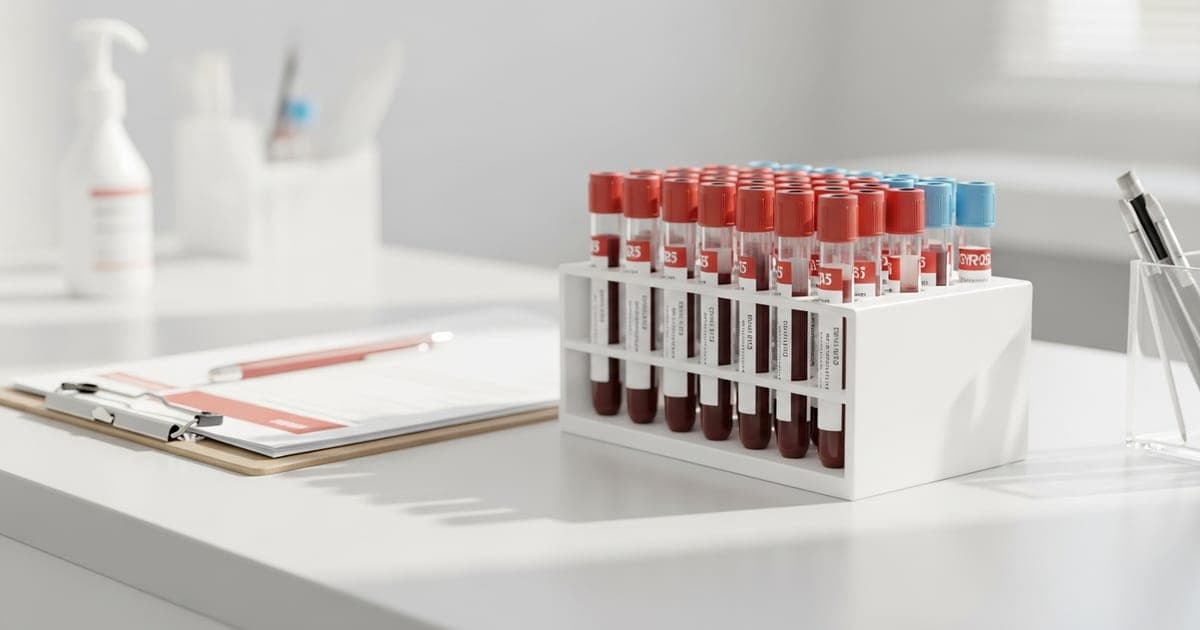
Quick answer: MCH (mean corpuscular hemoglobin) measures the average amount of hemoglobin inside each red blood cell — normal is 27–33 pg. MCV (mean corpuscular volume) measures the average size of red blood cells — normal is 80–100 fL. Both values are reported together on a complete blood count (CBC) and help identify the type and cause of anemia.
If you've looked at the results of a complete blood count (CBC), you've probably seen both MCH and MCV listed among the red blood cell measurements. These two indices work as a pair: MCH tells you how much hemoglobin is packed inside each cell, and MCV tells you how big those cells are. Together they help narrow down the cause of anemia and guide treatment. This guide covers both values — what they measure, normal ranges, what abnormal results mean, and what to do next.
What is MCH in a blood test?
MCH stands for mean corpuscular hemoglobin. It measures the average amount of hemoglobin — the iron-rich protein that carries oxygen — inside a single red blood cell. MCH is one of the red blood cell indices automatically reported as part of a complete blood count, the most common blood panel ordered during routine checkups.
Because hemoglobin is what allows red blood cells to deliver oxygen from your lungs to the rest of your body, MCH gives a quick snapshot of how well your red blood cells are equipped to do that job.
MCH is calculated from two other CBC values: total hemoglobin divided by red blood cell count, multiplied by 10. The result is expressed in picograms (pg).
What is MCV in a blood test?
MCV stands for mean corpuscular volume. It measures the average size (volume) of your red blood cells, expressed in femtoliters (fL). Along with MCH and MCHC, MCV is calculated automatically from your blood sample and reported on every CBC.
Red blood cell size is a key diagnostic clue. Abnormally small cells — a pattern called microcytic anemia — point to different underlying causes than abnormally large cells (macrocytic anemia), so MCV helps your doctor narrow down which type of anemia you have before ordering follow-up tests.
MCH normal range
For most adults, a normal MCH falls within the range below. Reference ranges differ slightly between laboratories and by age, so always compare your result to the range printed on your own report.
| Group | Typical MCH range (pg) |
|---|---|
| Adults | 27–33 |
| Children | 26–32 (varies with age) |
| Newborns | Higher than adults; falls during the first year |
MCV normal range
For most adults, the normal MCV falls between 80 and 100 fL. As with MCH, values vary by lab, age, and sex.
| Group | Typical MCV range (fL) |
|---|---|
| Adults | 80–100 |
| Children | 70–86 at age 1, rising to adult range by early teens |
| Newborns | Higher than adults (around 95–121 fL); falls during the first year |
What does low MCH mean?
A low MCH (below about 27 pg) means your red blood cells carry less hemoglobin than expected. Cells are often described as hypochromic (paler than normal). The most common cause is iron deficiency, but others include:
- Iron-deficiency anemia — from blood loss, a low-iron diet, or poor absorption
- Thalassemia and other inherited hemoglobin disorders
- Anemia of chronic disease (chronic kidney disease, inflammatory conditions)
- Long-term heavy menstrual bleeding
- Lead poisoning (less common)
Symptoms of low MCH
- Fatigue and weakness
- Pale or dull skin
- Shortness of breath with mild exertion
- Dizziness or lightheadedness
- Cold hands and feet
- Headaches
What does high MCH mean?
A high MCH (above about 33 pg) means your red blood cells carry more hemoglobin than average, often because the cells themselves are larger than normal (macrocytic). Common causes include:
- Vitamin B12 deficiency
- Folate (vitamin B9) deficiency
- Liver disease
- An underactive thyroid (hypothyroidism)
- Heavy or chronic alcohol use
- Certain medications that affect red blood cell development
Symptoms of high MCH
- Fatigue and weakness
- Pale or slightly yellow skin
- Difficulty concentrating or memory problems
- Numbness or tingling in the hands or feet (with B12 deficiency)
- Rapid or irregular heartbeat
What does low MCV mean?
A low MCV (below 80 fL) means your red blood cells are smaller than normal — a pattern called microcytic anemia. Low MCV and low MCH almost always occur together because smaller cells tend to hold less hemoglobin. Common causes include:
- Iron deficiency anemia — the most common cause worldwide; cells shrink when there isn't enough iron to make hemoglobin
- Thalassemia — inherited conditions that reduce hemoglobin production; MCV is often very low
- Anemia of chronic disease — inflammatory conditions can impair iron use
- Sideroblastic anemia — rare; iron is present but can't be incorporated into hemoglobin correctly
- Lead poisoning — interferes with hemoglobin synthesis
Symptoms of low MCV
Symptoms depend on how severe the anemia is and develop gradually:
- Fatigue and reduced exercise tolerance
- Pallor (pale skin, nail beds, or gums)
- Shortness of breath
- Dizziness or lightheadedness
- Brittle nails or hair loss (with iron deficiency)
- Pica — unusual cravings for non-food items like ice or dirt (a classic sign of iron deficiency)
What does high MCV mean?
A high MCV (above 100 fL) means your red blood cells are larger than normal — a pattern called macrocytic anemia. Large cells are less efficient at passing through small blood vessels. Common causes include:
- Vitamin B12 deficiency — one of the most common causes; the body can't make normal-sized cells without B12
- Folate deficiency — folate is essential for DNA synthesis in developing red blood cells
- Liver disease — abnormal lipid deposits enlarge red blood cell membranes
- Hypothyroidism — an underactive thyroid slows bone marrow production of normal cells
- Heavy alcohol use — alcohol directly impairs red blood cell development and can cause folate deficiency
- Certain medications — methotrexate, hydroxyurea, some antivirals and anticonvulsants
- Myelodysplastic syndrome — a bone marrow disorder producing abnormally large cells
Symptoms of high MCV
- Fatigue, weakness, and low stamina
- Pale or slightly yellow (jaundiced) skin
- Sore or smooth tongue (glossitis)
- Numbness or tingling in hands and feet (with B12 deficiency)
- Difficulty concentrating or memory problems
- Rapid heartbeat
How MCH and MCV work together
MCH and MCV usually move in the same direction — low MCH almost always pairs with low MCV, and high MCH with high MCV. The combined pattern is the most useful diagnostic shorthand for the type of anemia:
| MCH | MCV | Common pattern name | Likely cause |
|---|---|---|---|
| Low | Low | Microcytic hypochromic anemia | Iron deficiency, thalassemia |
| Normal | Normal | Normocytic normochromic anemia | Acute blood loss, chronic disease, kidney disease, early deficiency |
| High | High | Macrocytic hyperchromic anemia | B12 deficiency, folate deficiency, liver disease, alcohol use |
A discordant result — for example, a low MCV with a normal or high MCH — is unusual and may indicate a mixed anemia or a lab instrument flag worth investigating further with your provider.
MCH vs. MCV vs. MCHC — what is the difference?
These three indices are easy to confuse because they're reported together and all start with "MC." Here's how they differ:
| Index | What it measures | Unit | Normal adult range |
|---|---|---|---|
| MCH | Average amount of hemoglobin per red blood cell | pg | 27–33 |
| MCV | Average size (volume) of a red blood cell | fL | 80–100 |
| MCHC | Average concentration of hemoglobin within a cell | g/dL | 32–36 |
MCHC is derived from MCH and MCV. If MCV is low (small cells) but the cells are densely packed with hemoglobin, MCHC can be relatively preserved. Doctors look at all three together to build a fuller picture of your red blood cell health.
How are MCH and MCV tested?
Neither MCH nor MCV is ordered as a standalone test — both are automatically calculated as part of a complete blood count. A phlebotomist draws a small blood sample from a vein in your arm, and the lab analyzer reports all CBC values including MCH and MCV within the same results. No special preparation is usually needed unless your provider is also running fasting tests like a lipid panel.
Need a CBC drawn from home?
Speedy Sticks sends a certified phlebotomist directly to your home or office to collect your sample for your existing lab or doctor's order — no clinic visit required. Book an at-home blood draw or explore wellness blood testing.
How to improve abnormal MCH or MCV
Treatment depends entirely on the underlying cause your provider identifies. Common approaches include:
- For low MCH/MCV (iron deficiency): increase dietary iron (lean red meat, lentils, beans, leafy greens, fortified cereals) and treat any source of blood loss. Your provider may prescribe iron supplements — do not self-supplement without confirming the diagnosis first.
- For high MCH/MCV (B12 or folate deficiency): correct the deficiency through diet (meat, eggs, dairy for B12; leafy greens, legumes for folate) or prescribed supplements. B12 deficiency from poor absorption may require injections.
- For high MCH/MCV (liver disease or alcohol): work with your provider to address the underlying condition and reduce alcohol intake.
- For thalassemia: mild forms often require no treatment; more severe forms are managed by a hematologist.
Never start supplements purely to "fix" a lab number. Your provider needs to confirm the cause first — for example, taking iron when you don't have iron deficiency can be harmful.
When to see a doctor
A mildly abnormal MCH or MCV on a routine CBC is not usually an emergency, but it should be followed up — especially if you have symptoms such as persistent fatigue, shortness of breath, or pale skin. Your provider may repeat the CBC or order additional tests such as iron studies, serum B12, folate, reticulocyte count, or a peripheral blood smear to identify the specific cause.
This article is for general education and is not medical advice. Always discuss your test results and any health concerns with a qualified healthcare provider.
A CBC — the test that reports MCH — can be drawn at home through mobile phlebotomy. No fasting required.