
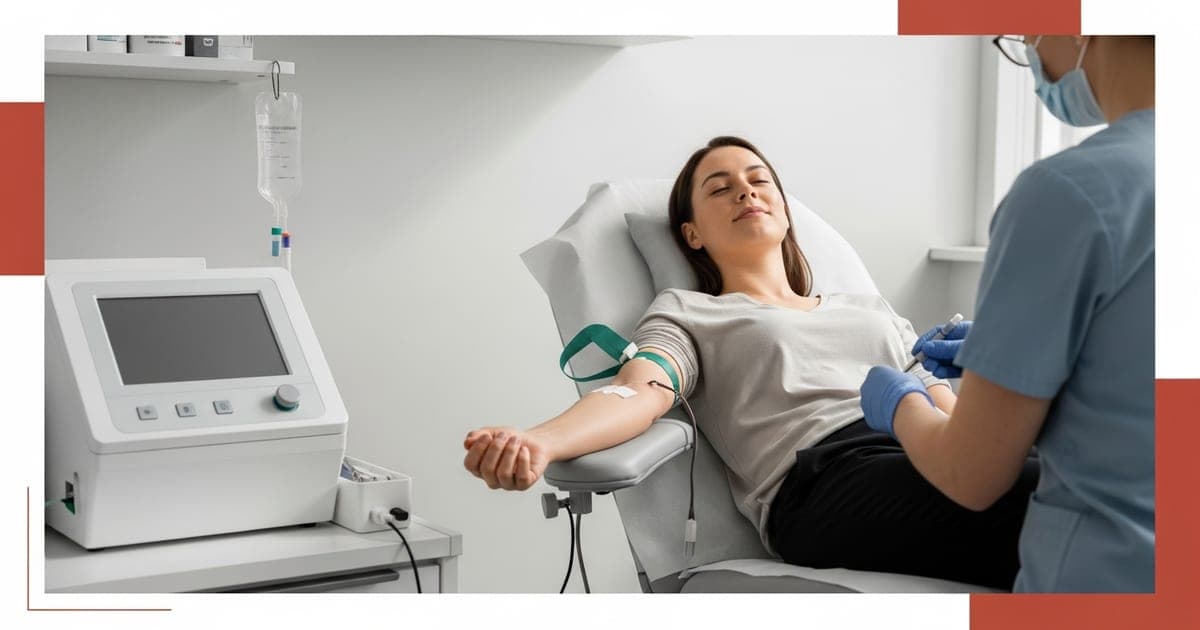
The needle comes out, the phlebotomist applies pressure — and then the room starts to swim. For some people, dizziness after a blood draw is a near-certainty. For others, it has never happened and then suddenly does. Understanding why it happens, and how to prevent it, changes the experience entirely.
The vasovagal response: what it is and why it happens
The dizziness and fainting that happen around blood draws are almost always caused by the vasovagal response, also called vasovagal syncope. It is not caused by blood loss. The amount of blood drawn in a routine blood test — typically three to 30 milliliters, or about one to six teaspoons — is not enough to meaningfully lower your blood volume. Your body holds approximately five liters of blood. A standard draw takes less than one percent of that.
What triggers the vasovagal response is the nervous system’s reaction to the sight of a needle, the perception of pain, or psychological anticipation. The vagus nerve — which regulates heart rate and blood pressure — is briefly overstimulated. Heart rate drops. Blood vessels in the legs widen and allow blood to pool away from the brain. Blood pressure falls. The brain receives less oxygen than normal for a moment, and the result is lightheadedness, nausea, visual changes, sweating, and sometimes fainting.
The whole cascade can happen within seconds of the stick, or it can build slowly over a minute or two after the needle is out. It is involuntary — not a sign of weakness, low pain tolerance, or anything about the person’s character. It is a reflex, and it can affect anyone.
| Step | Timing | Why it helps |
|---|---|---|
| Drink 16–24 oz water | 1–2 hours before draw | Hydration improves vein quality and blood pressure stability |
| Eat a light meal (if non-fasting) | 1–2 hours before draw | Maintains blood glucose, reducing vasovagal risk |
| Lie flat or recline | During and 10 min after draw | Eliminates gravity component — most effective single intervention |
| Applied muscle tension | Start 1 min before the stick | Raises blood pressure to counteract vasovagal drop |
| Keep needle out of sight | During draw | Removes visual trigger for vasovagal reflex |
| Have a juice or snack after | Immediately post-draw | Restores blood sugar if you feel light-headed |
Who is most likely to feel dizzy after a blood draw
While the vasovagal response can occur in anyone, certain factors make it more likely:
- First-time blood draw. Patients who have never had blood drawn before are at higher risk simply because they do not know what to expect. Anticipatory anxiety is a potent trigger.
- Fasting. Low blood sugar before a draw amplifies the vasovagal response. Even a small drop in glucose reduces the brain’s buffer against the blood pressure dip.
- Dehydration. Less fluid in the circulatory system means there is less cushion when blood pressure briefly falls.
- Heat. High ambient temperature causes peripheral vasodilation — blood vessels are already widened before the draw begins — leaving less reserve when the vagal response further drops blood pressure.
- Standing or sitting upright. Gravity works against you when blood pressure falls. Blood pools in the legs more readily when you are upright than when you are reclined.
- Prior vasovagal episodes. If it has happened before, the body has a learned response. Anticipatory anxiety about fainting can itself trigger the response.
- Young adults and adolescents. The vasovagal response is more common in younger populations, for reasons that are not fully understood.
The applied tension technique: how to prevent fainting during a draw
If you have a history of vasovagal episodes during blood draws, there is a specific technique that works: applied tension.
Applied tension counteracts the vasovagal response by raising blood pressure through muscle contraction, which opposes the blood pressure drop that leads to fainting. Here is how to do it:
- Beginning about one minute before the draw, tense the muscles in your legs, abdomen, and the arm that is not being drawn.
- Hold the tension for 10 to 15 seconds until you feel warmth rising in your face and upper body.
- Release for 20 to 30 seconds.
- Repeat throughout the draw and for two to three minutes after.
Applied tension was developed as part of a behavioral treatment protocol for blood-injection-injury phobia and has good clinical evidence behind it. It can be learned and practiced before an appointment. Tell your phlebotomist you plan to use it — they will not be surprised, and they can narrate what is happening so you stay focused and calm.
What your phlebotomist does when a patient feels faint
An experienced phlebotomist reads the early signs of a vasovagal response before the patient loses consciousness: pallor (the face goes white), sudden diaphoresis (cold sweating), a change in breathing, or the patient reporting that they feel “strange” or that their vision is narrowing. These warnings appear 30 to 60 seconds before fainting in most cases — enough time to intervene.
Standard response:
- Remove the needle immediately if still in place, and apply pressure to the site.
- Recline the patient. Lay them flat or as close to flat as possible. This immediately removes gravity from the equation and helps blood return to the brain.
- Elevate the legs. Raising the legs above the level of the heart further accelerates blood return to the brain.
- Apply a cold compress to the forehead or back of the neck. Cold causes peripheral vasoconstriction that helps restore blood pressure.
- Wait. The vasovagal response is self-limiting. Blood pressure and heart rate return to normal within one to three minutes of lying flat in the vast majority of cases. No medication is required.
- Offer juice or a snack once the patient is fully alert. Glucose helps recovery, particularly if fasting was a contributing factor.
The home advantage: fainting at home vs. fainting in a clinic
Consider the difference between experiencing a vasovagal episode in a clinical setting versus at home.
In a lab or clinic: the patient is in an unfamiliar chair or exam table. The room may be warm, crowded, and brightly lit. After the draw, they need to get up, walk to a checkout desk, navigate to their car, and drive home — all while their blood pressure is still recovering. A patient who becomes dizzy in a clinic parking lot and falls, or who feels too unwell to drive and has to wait, has experienced something genuinely unpleasant and potentially dangerous.
At home: the patient is already in their own space. If they feel dizzy, they lie down on their own sofa or bed. There is no commute. A companion is present (recommended for any patient with a history of vasovagal episodes). Our phlebotomist can wait with the patient until they are fully recovered before leaving.
Patients who have fainted at labs in the past and have avoided blood draws because of it often find a home draw to be a significantly better experience.
How to prepare to prevent dizziness on draw day
- Hydrate. Drink 16 to 32 ounces of water in the 30 to 60 minutes before the draw. Plain water is fine even if you are fasting.
- Eat beforehand if permitted. If fasting is not required, a light meal with protein and complex carbohydrates steadies blood sugar and reduces vasovagal risk. If fasting is required, have a snack ready to eat immediately after.
- Tell your phlebotomist. Mention that you have a history of dizziness or fainting before the draw begins. We will position you accordingly (lying down), watch closely, and pace the appointment to give you the best chance of a smooth draw.
- Request to lie down. You do not need a documented history of fainting to request a reclined position for a blood draw. You can ask at any time. We accommodate this routinely.
- Bring a companion. Especially for patients with a strong vasovagal history, having a familiar person present reduces anticipatory anxiety and ensures someone is there to assist if needed.
If you regularly feel dizzy or faint after blood draws, a home draw through mobile phlebotomy lets you rest immediately afterward — in your own space, with food and fluids at hand.
Sources and further reading
Less Dizziness Starts With a Better Setting
A calm home environment — lying down, comfortable surroundings, no clinical anxiety — reduces vasovagal responses. A mobile phlebotomist comes to you.
Book a visit →