
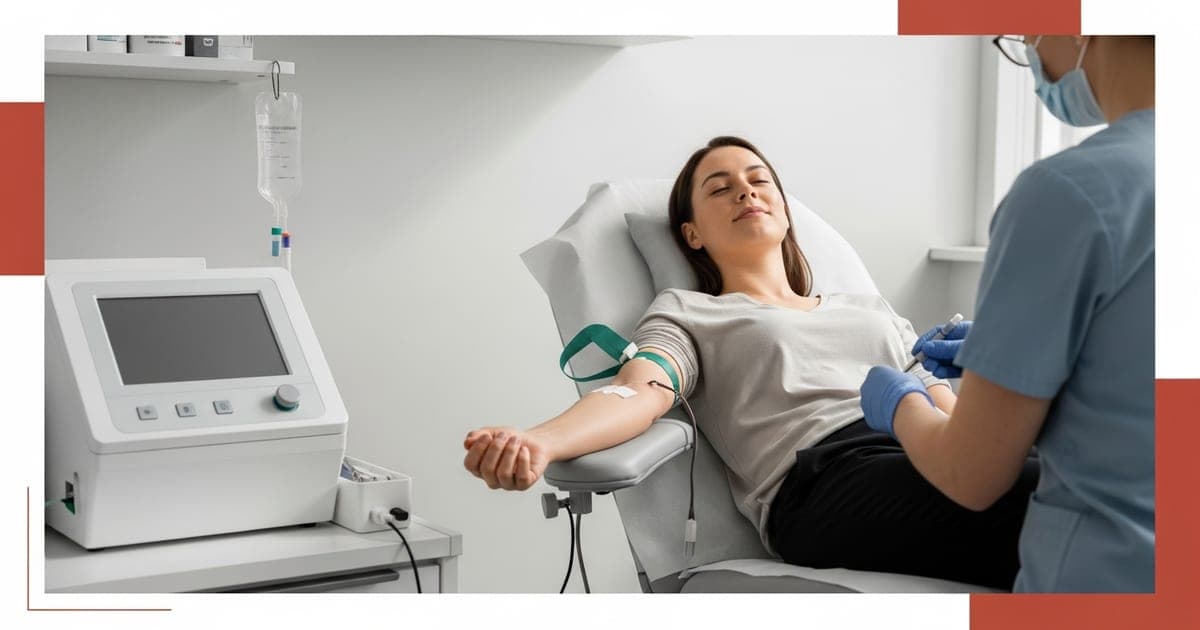
Fainting (vasovagal syncope) during or after a blood draw affects approximately 1 in 20 patients. It is triggered when anxiety, pain, or the sight of blood activates the vagus nerve, causing a sudden drop in heart rate and blood pressure. The most effective evidence-based prevention is applied muscle tension: tensing arms, legs, and abdomen for 10–15 seconds, releasing, and repeating throughout the draw. Lying flat during the procedure also substantially reduces vasovagal risk.
Why People Faint: Vasovagal Syncope
Fainting during a blood draw is almost always vasovagal syncope — a reflex driven by the vagus nerve. The sequence:
- A trigger occurs: needle anxiety, the pain of insertion, or the sight of blood
- Your autonomic nervous system overreacts, activating the parasympathetic branch
- Heart rate drops suddenly; blood vessels in the legs dilate (vasodilation)
- Blood pressure falls faster than the body can compensate
- Blood flow to the brain temporarily decreases → tunnel vision, then blackout
This is a protective reflex, not a sign of weakness, illness, or low pain tolerance. It evolved to reduce blood loss in response to trauma. Unfortunately, the reflex can't distinguish between actual injury and a routine venipuncture.
Who Is Most at Risk
| Risk Factor | Why It Increases Fainting Risk |
|---|---|
| Prior fainting during draws | Strongest predictor — the reflex tends to be consistent in those who experience it |
| High needle anxiety | Anticipatory anxiety activates the vagal response before the needle touches skin |
| Teens and young adults | Vasovagal sensitivity is highest in younger people; reflex often diminishes with age |
| Fasting before the draw | Low blood glucose removes a buffer against the blood pressure drop |
| Dehydration | Lower circulating blood volume makes the pressure drop more severe |
| Hot or stuffy environment | Heat causes peripheral vasodilation, compounding the vagal drop |
| Sitting or standing upright | Gravity pools blood in the legs; reclined patients faint far less frequently |
| First-time draw | Uncertainty amplifies anxiety, raising the likelihood of a vagal trigger |
Warning Signs to Recognize Immediately
Vasovagal syncope almost always gives warning before full loss of consciousness. Tell your phlebotomist immediately if you notice:
- Sudden nausea
- Tunnel vision or graying out at the edges
- Cold, clammy skin
- Ringing in the ears
- Unusual warmth or flushing
- Lightheadedness or dizziness
- Unexplained yawning (a parasympathetic sign often overlooked)
A trained phlebotomist will recline your chair, elevate your legs above heart level, and apply a cool compress to the back of your neck. Acting on the warning signs usually prevents full syncope.
Evidence-Based Prevention Techniques
Applied Muscle Tension (AMT) — the most effective method
Applied Muscle Tension is a cognitive behavioral technique with strong clinical evidence for preventing vasovagal fainting. The technique works by actively raising blood pressure to counteract the vagal drop:
- Tense the muscles in your legs, arms, and abdomen simultaneously — as hard as you comfortably can
- Hold for 15 seconds, then release for 30 seconds
- Repeat the cycle throughout the blood draw and for a few minutes after
Studies show AMT reduces fainting episodes by 60–80% in people with recurrent vasovagal syncope. It works because sustained muscle contraction pushes blood from the peripheral veins back into central circulation, keeping blood pressure from dropping.
Position matters more than most people think
Asking to be reclined at 45 degrees (or fully flat) is one of the highest-impact changes you can make. In the reclined position, gravity no longer pulls blood away from the brain, and even a significant blood pressure drop is far less likely to cause syncope. If you have a history of fainting, mention it at check-in — most phlebotomists will recline you by default once they know.
Prepare before the draw
- Eat a meal 1–2 hours before (unless fasting is required for the specific test) — adequate blood glucose helps buffer the pressure drop
- Hydrate well — drink 500–750 mL of water in the hour before your draw; higher circulating blood volume makes the vasovagal drop less severe
- Avoid caffeine beforehand — it amplifies anxiety and increases baseline heart rate variability
- Wear comfortable, loose-sleeved clothing — constriction adds to physical discomfort and anxiety
During the draw
- Look away and focus on a fixed point on the opposite wall — seeing blood is a confirmed vagal trigger for many people
- Breathe slowly and deliberately — slow exhalations activate the parasympathetic system in a controlled way, reducing the amplitude of any reflex
- Talk to the phlebotomist — verbal engagement is a genuine distraction technique; silence lets anxiety build
- Do AMT throughout — start muscle tensing before the needle goes in and continue until the draw is complete
After the draw
Remain seated or reclined for at least 5 minutes after the draw completes — the vagal reflex can occur 1–5 minutes post-draw as the adrenaline of anticipation fades. Eat or drink something (juice, a small snack) before you drive. If you feel any warning signs while standing up, sit back down immediately.
What Happens If You Actually Faint
If you lose consciousness during a draw, a trained phlebotomist will:
- Remove the needle immediately and secure the site
- Lay you flat and elevate your legs above heart level
- Apply a cool, damp cloth to your forehead and neck
- Monitor your breathing and pulse
- Keep you horizontal until you are fully alert and stable — typically 5–15 minutes
Full recovery from uncomplicated vasovagal syncope is typically rapid. The most common injury is from an uncontrolled fall before the phlebotomist can intervene, which is why signaling warning signs early is so important.
When a Home Blood Draw Makes Sense
If you reliably faint or experience severe anxiety in clinical settings, mobile phlebotomy changes the equation entirely. Consider what's different:
- You're on your own couch or bed — fully reclined from the start, in a familiar environment
- No waiting room to sit in while anxiety builds
- No clinical smells, other patients, or sharp overhead lighting
- You can have a family member or partner present for reassurance
- After the draw, you don't have to drive anywhere — you're already home
People who reliably faint in lab settings frequently complete mobile blood draws without incident. The combination of a comfortable reclining position, familiar surroundings, and elimination of waiting-room anxiety removes the most common vasovagal triggers.
Sources and further reading
Home Draws Reduce Vasovagal Risk
Lying down in your own home, no clinical anxiety, familiar environment — home blood draws significantly reduce the stress response that triggers vasovagal syncope.
Book a visit →