
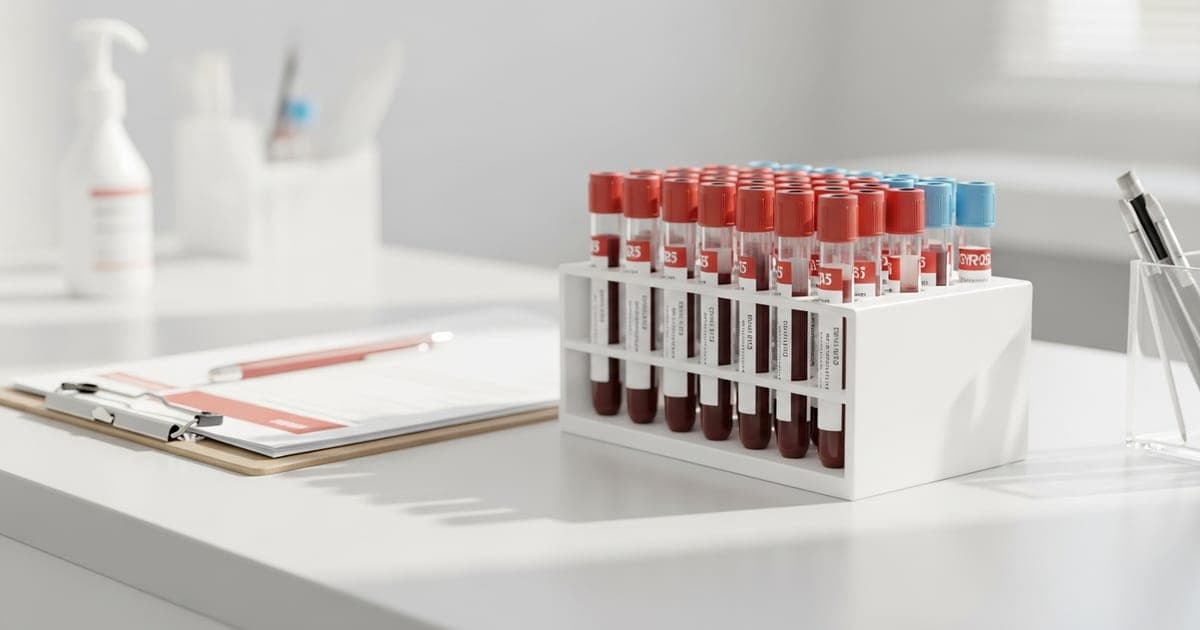
Before a cholesterol test, your doctor will likely tell you to fast for 8-12 hours. This is to prevent an intake of calories from disrupting the results of your test, which will measure your total cholesterol, as well as the amounts of HDL (“good” cholesterol), LDL (“bad” cholesterol), and triglycerides. This has led many who have been diagnosed with high cholesterol to wonder: if fasting is prescribed before a lipid panel, does fasting help cholesterol levels in the long term?
What Fasting Does (and Doesn't) Do to Your Cholesterol Numbers
| Lipid Marker | Effect of a Single Pre-Test Fast | Effect of Long-Term Dietary Change |
|---|---|---|
| Triglycerides | Drops significantly — most responsive to fasting; can fall 20–50% after 12 hrs | Dramatically lowered by reduced sugar, refined carbs, and alcohol |
| LDL cholesterol | Minimally affected by a single fast | Lowered by reduced saturated fat, increased soluble fiber, statins |
| HDL cholesterol | Essentially unchanged by fasting | Raised by exercise, moderate alcohol (modest), weight loss |
| Total cholesterol | Minor reduction from triglyceride drop; not clinically meaningful | Meaningful reduction from dietary fat modification and weight loss |
| Non-HDL cholesterol | Minor change following triglyceride shift | Reduced by same interventions as LDL; often better marker than LDL alone |
The answer is complicated, with some research pointing to certain types of fasting as potentially helpful in reducing cholesterol levels and improving heart health. However, with the many approaches to fasting out there, it’s important to understand the type of fasting that could help and what results you can expect.
What is Fasting?
As opposed to a conventional diet, which restricts the foods you can eat, fasting is a type of diet that restricts the time during which you can eat them. Most fasting plans set aside certain hours of the day for the one meal you can eat that day, while other days are open for regular eating. Many people fast for reasons other than health – certain religious observances like Ramadan in the Islamic faith require its participants to fast.
How Does Fasting Work?
As a diet fad, you may wonder how fasting could be healthy. The answer to that lies in the origins of human history. Millennia ago, humans were hunter-gatherers whose bodies had to survive for many days at a time without food. The humans that survived and passed their genetics to modern people were those who could survive the times of little to no food availability. Despite being hungry, they still had to expend energy to hunt, travel, and find more food.
As a result, modern people do not technically have to eat as much as we do. The cultural edict of three meals a day is a result of eating when hungry, but our bodies can go much longer before a lack of food impacts our health.
This is why, for most people, convincing your brain and body to fast is not dangerous when done in moderation. It has the potential to change your metabolism and with it, your risk factors for certain conditions, including high cholesterol.
The Effects of Fasting
Your body uses the food you consume as energy. Without constantly replenishing that food store, your body looks elsewhere to exhaust its energy stores, including your body’s excess fat. This process is known as “metabolic switching” and refers to the body switching its source of energy from glucose to ketones. In other words, without new food to process, it begins to burn fat.
By burning fat, your body may lower its levels of LDL, the “bad” cholesterol (healthy levels are considered 100 mg/dL and under). With these levels under control, you may not gain weight as easily, which will lower your risks for obesity, heart disease, diabetes, and more. This can lower cholesterol both directly and indirectly, improving heart health in the process.
Who Should Not Fast?
While fasting a few days a week has shown the potential to improve heart health and lower cholesterol levels, some people should not fast. These include:
- People who are underweight or suffering from eating disorders
- People on diabetes medications
- People with liver disease
- Pregnant women and those who are breastfeeding should also refrain from fasting, since their bodies have important uses for excess calories.
As with any major diet change, speak with your doctor about the viability of fasting in your situation. Those who are currently on an unhealthy diet stand to benefit the most from fasting while those already eating healthy may see a less pronounced change.
However, research suggests since a Western diet has led to negative metabolic changes in the population, changes in diet could have positive changes on metabolism. This could potentially improve memory, heart health, and physical performance in its participants while reducing their risks of obesity, diabetes, and high cholesterol.
Speedy Sticks is a mobile concierge phlebotomy service that provides at-home blood draws and on-site diagnostic/health screenings for businesses and individuals. One of these tests is a Lipid Panel which can be performed by one of our specialists. Book an appointment today to find out your cholesterol levels.
*This content is for informational purposes only and is not meant to replace consulting with a healthcare professional. Please consult with your primary care physician or healthcare provider before engaging in any services offered by Speedy Sticks.
**These are approximations, and experts disagree on some values. Consult your healthcare provider for recommendations suitable for you. It is also important to ensure the levels are given in the same measurements, such as mg/dL, etc.
If you need a blood draw at home, mobile phlebotomy lets a licensed phlebotomist come to you — eliminating the need to rush to a lab after a workout or manage timing around fasting windows.
Sources and further reading
The science behind fasting and cholesterol readings
Fasting does not directly lower your cholesterol — it lowers the amount of dietary fat circulating in your blood at the time of the test, which makes the measurement more accurate.
Here is what happens biologically:
- When you eat fat, your gut absorbs it as chylomicrons — fat particles that enter the bloodstream and temporarily elevate triglycerides for 6–8 hours. This is normal.
- Standard lipid panels calculate LDL using a formula that subtracts triglycerides from total cholesterol. When triglycerides are elevated from a recent meal, the calculated LDL is artificially lower than it really is — giving a falsely reassuring result.
- HDL and total cholesterol are less affected by recent food, but triglycerides are highly variable depending on what you ate and when.
Fasting "helps" in the sense that it removes this dietary fat noise, making your cholesterol measurement a true reflection of your body's lipid production — not yesterday's dinner.
Non-fasting lipid panels: when they are acceptable
Clinical guidance has evolved on this. A 2016 European consensus and subsequent updates from the ACC/AHA found that non-fasting lipid panels are acceptable for routine cardiovascular risk screening in most adults:
- Total cholesterol, HDL, and LDL are fairly stable across the day in most people
- The 10-year cardiovascular risk calculators (Pooled Cohort Equations, SCORE) use non-fasting values in some European guidelines
- Non-fasting triglycerides above 175 mg/dL are considered elevated
Non-fasting panels are less appropriate when: you have known hypertriglyceridemia, are being evaluated before starting or adjusting statin therapy, or when a precise LDL value is needed for a treatment decision. In those cases, fasting for 9–12 hours is still the standard.
Does fasting actually change your cholesterol number over time?
No. The act of fasting before a blood test does not change what your underlying cholesterol level actually is — it only removes test-day dietary interference. Your LDL, HDL, and total cholesterol between draws are determined by genetics, diet pattern, weight, exercise, and medications — not by fasting for a single morning.
People sometimes confuse short-term fasting (skipping breakfast before a blood test) with intermittent fasting diets (16:8, extended fasting), which can modestly improve lipid profiles over weeks or months by reducing triglycerides and sometimes raising HDL. That is a dietary intervention effect — not the same thing as fasting before a draw.
Fasting Lipid Panel — Done at Home
Fast the night before, schedule a morning visit. A certified phlebotomist arrives at your door for your cholesterol and triglyceride draw — same lab, no commute.
Book a visit →