
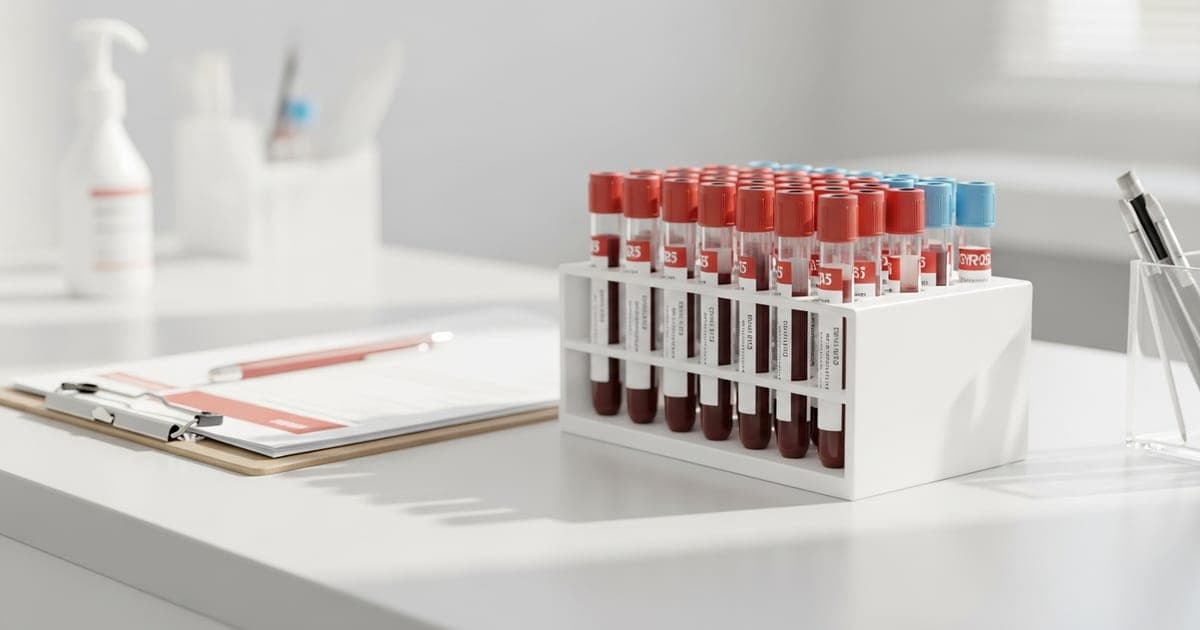
Practitioners have long prescribed a fast of 8-12 hours before a lipid panel, also known as a cholesterol test. Indeed, most doctors who have practiced for over 10-15 years will still require fasting to prevent the results of the test from being affected by the patient’s metabolic processes. However, more recent research suggests that lipid panel fasting vs non-fasting results are more complexly indicated depending on the situation.
How Fasting vs. Non-Fasting Affects Each Lipid Result
| Marker | Affected by Non-Fasting? | How Much Does It Change? | Clinical Impact |
|---|---|---|---|
| Triglycerides | Yes — significantly | Rises 20–50% after a mixed meal; can stay elevated 6–8 hrs post-meal | A non-fasting TG of 200 mg/dL could be normal fasting; always fast if TG is the clinical question |
| LDL cholesterol (calculated) | Indirectly — via TG | Friedewald formula uses TG; elevated TG lowers calculated LDL (falsely appears lower) | If TG >400 mg/dL, calculated LDL is unreliable; direct LDL measurement needed |
| Total cholesterol | Minimal | ~5–8 mg/dL change post-meal | Not clinically meaningful; cardiovascular risk category rarely changes |
| HDL cholesterol | Minimal | <5 mg/dL change post-meal | Not clinically meaningful |
| Non-HDL cholesterol | Slight | Rises with TG but less dramatically | ESC/EAS guidelines now prefer non-HDL over LDL for non-fasting draws |
When to Fast — and When You Don't Need To
- Fast (9–12 hrs): suspected hypertriglyceridemia, prior elevated TG, baseline lipid panel before starting a statin, diagnosing familial hypercholesterolemia, LDL is the primary endpoint
- Non-fasting OK: routine cardiovascular risk screening, monitoring total/HDL in stable patients, confirming non-HDL target compliance, most annual wellness panels
Continue reading to learn about fasting vs non-fasting results for lipid panel testing. Remember to follow your doctor’s orders and ask them about any changes you make to your routine.
What is Lipid Panel Testing?
A lipid panel is a series of five tests conducted on a patient’s blood sample. Together, they are considered a doctor’s primary diagnostic device in evaluating a patient’s cholesterol levels, which factor into their risk for cardiovascular diseases.
The five tests indicated in a lipid panel include:
- HDL (high-density lipoprotein) test – HDL or “good” cholesterol helps your body control “bad” cholesterol by rerouting it to your liver to be processed and removed from your system. This is why higher levels of HDL are associated with better cardiovascular health. HDL levels are considered healthy when they are:
- 45 mg/dL and above for children 19 and younger
- 40 mg/dL and above for men 20 and older
- 50 mg/dL and above for women 20 and older
- LDL (low-density lipoprotein) test – LDL or “bad” cholesterol is indicative of lower cardiovascular health since it collects in blood vessels and can cause cardiovascular diseases when left untreated. Healthy levels are considered those below 100 mg/dL.
- VLDL (very low-density lipoprotein) test – VLDL contains even more dangerous fats than LDL.
- Triglyceride test – We consume fats called triglycerides, which in excess can cause CVD and inflammation when sustained at 150 mg/dL or higher.
- Total cholesterol test – Total cholesterol is the other four numbers added together, giving your doctor an overall picture of your cardiovascular health.
Lipid Panel Results: Fasting vs Non-Fasting
Since the numbers listed above are indications of cardiovascular health, your doctor will want to make sure the tests are accurate. This is why they order fasting for 8-12 hours before the test. However, recent research has noted a more complex relationship between fasting and non-fasting results for lipid panels.
LDL and VLDL, which are most affected by the food we consume, are also the tests that indicate fasting most strongly. For HDL and total cholesterol readings, the fasting and non-fasting results are not significantly different, according to the American College of Cardiology. Therefore, some doctors may change their fasting orders depending on the tests conducted.
Additionally, a metabolic syndrome risk assessment could be conducted in non-fasting conditions. A lipid panel resulting in a very high triglyceride reading (above 200 mg/dL) and a very low HDL reading (below 40 mg/dL for men and 50 mg/dL for women) in the presence of a high A1c (above 5.6%) would be an acceptable cause for treatment of metabolic syndrome even if the test was conducted without fasting.
In the same way, identifying a hyper-triglyceridemic state in a patient (or a triglyceride reading above 200 mg/dL) in a non-fasting patient could justify a course of treatment with or without a repeated test in a fasting state.
In individuals with these extreme results, fasting would not be expected to change the test drastically enough to be indicated. However, fasting may still be required by your physician for various reasons.
When Fasting is Required
Other than being the traditional prescription for a lipid panel, your doctor may still order fasting before a lipid panel for various reasons. One is that patients with pancreatitis need to have high triglyceride levels checked, which requires fasting. Another example is in patients at risk for statin-induced diabetes or acute coronary syndrome. Risk factors related to triglyceride levels would need to be closely evaluated under fasting conditions.
Ongoing treatments that may affect cholesterol levels, such as a statin regime, indicate fasting before a lipid panel. Your physician will check the effects of the protocol as well as the impact of lifestyle factors on your pre- and post-treatment levels. Therefore, they will order fasting before your lipid panel.
The Takeaway
While recent research suggests fasting is not as necessary before every lipid panel as previously thought, fasting still provides doctors with a more accurate pretreatment baseline for certain measurements, especially for patients with certain conditions. It will, therefore, still be recommended in most cases before receiving the test, even if the margin of difference in the results is often considered negligible.
Speedy Sticks is a mobile concierge phlebotomy service that provides at-home blood draws and on-site diagnostic/health screenings for businesses and individuals. One of these tests is a Lipid Panel which can be performed by one of our specialists. Book an appointment today to find out your cholesterol levels.
*This content is for informational purposes only and is not meant to replace consulting with a healthcare professional. Please consult with your primary care physician or healthcare provider before engaging in any services offered by Speedy Sticks.
**These are approximations, and experts disagree on some values. Consult your healthcare provider for recommendations suitable for you. It is also important to ensure the levels are given in the same measurements, such as mg/dL, etc.
Need a lipid panel without a lab visit? A mobile phlebotomist can collect your sample at home — the same certified reference lab processes it.
Sources and further reading
Lipid Panel Collected at Home
Whether fasting or non-fasting, a mobile phlebotomist comes to you for your cholesterol draw. Same certified reference lab processes the sample.
Book a visit →