For most of the history of laboratory medicine, getting blood drawn meant going to a lab. You drove to a patient service center, waited, had your blood collected by whichever phlebotomist was available, and drove home. For people with reliable transportation, predictable schedules, and no significant health barriers, this worked. For everyone else — the rural patient an hour from the nearest Quest or Labcorp, the homebound patient with mobility limitations, the working parent who can't leave mid-day, the executive who needs testing without a waiting room — it didn't.
Nationwide mobile labs represent a fundamental reorientation of that model. Instead of the patient traveling to specimen collection, specimen collection travels to the patient — anywhere in the country, in a timeframe that works for them.
What nationwide mobile lab testing actually means
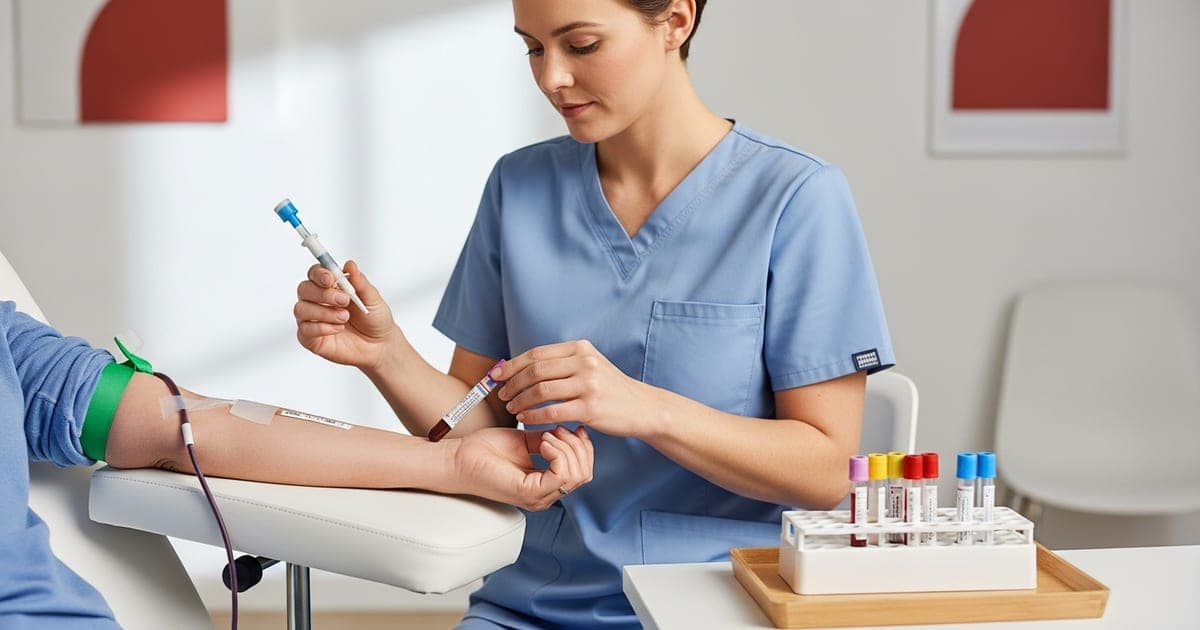
The term "mobile lab" covers two distinct service models that are worth distinguishing. The first is a mobile specimen collection service — a phlebotomist who comes to your home, office, or facility to collect blood, urine, or other specimens, then routes those specimens to a licensed reference laboratory for processing. The second is a self-contained mobile laboratory vehicle equipped to run certain analyses on-site. Speedy Sticks operates the first model: we are a nationwide mobile specimen collection network, not a vehicle-based diagnostic lab. Your specimens go to Quest Diagnostics, Labcorp, or another licensed facility for processing, which is where the quality controls, accreditation standards, and reference ranges that your physician relies on live.
Understanding this distinction matters for patients: mobile specimen collection gives you the same lab results you'd get from a PSC visit, delivered through the same accredited laboratory system, without the travel.
Who needs nationwide mobile lab coverage
The demand for mobile lab access is broader than most people assume:
- Patients in healthcare deserts — rural and exurban areas where the nearest PSC is 45 minutes away or more, making frequent monitoring (weekly INR, monthly A1C, quarterly liver panels) genuinely burdensome
- Homebound and mobility-limited patients — individuals who cannot safely or comfortably make an outpatient lab visit due to illness severity, recent surgery, wheelchair dependence, or advanced age
- Concierge and direct primary care patients — physicians who want a high-service experience for their patients and can't offer it with a "go to Quest" referral
- Employers and occupational health programs — businesses that need DOT physicals, drug screens, or pre-employment panels completed at employees' locations across multiple states without a single-city lab contract
- Clinical research programs — sponsors and CROs running decentralized trials who need consistent, protocol-compliant specimen collection across a geographically distributed participant population
- Health system overflow — large hospital systems and health plans that use mobile phlebotomy to handle overflow during high-demand periods or to serve patients who would otherwise delay care
The logistics that make nationwide coverage work
Running mobile phlebotomy at scale across multiple states requires infrastructure that most people don't think about until something goes wrong. At the core is a network of credentialed phlebotomists — licensed where state law requires licensure, insured, and trained on the collection protocols and documentation standards that accredited laboratories require. Layered on top is scheduling infrastructure that matches patient appointment windows to phlebotomist availability and geography, routing that minimizes travel time across multi-patient days, and chain-of-custody documentation from the moment of collection through hand-off to the processing laboratory.
The specimen itself presents logistics challenges. Blood collected for a lipid panel can sit at room temperature for a few hours. Blood collected for a cold-agglutinin titer must be kept warm (at 37°C) from the moment of collection. Plasma collected for certain coagulation studies has processing window requirements measured in minutes. The mobile phlebotomist must know and execute these requirements on every draw, in a patient's living room, without the equipment and backup that a clinical lab has on-site.
Integrating mobile labs with your existing care model
For clinicians and care coordinators, the practical question is how mobile phlebotomy fits into your ordering and results workflow. The short answer is that it fits exactly the same way as a PSC visit. The patient uses your existing lab order (on Quest, Labcorp, or whichever lab you use). Our phlebotomist collects the specimens and routes them to that laboratory using standard intake procedures. Results return to the ordering provider through the same channel they would from any other collection site.
For practices looking to offer mobile phlebotomy as a service to their panel, we work directly with the practice to establish preferred scheduling channels, documentation preferences, and any patient population-specific requirements.
Learn about our mobile lab services for providers and organizations or schedule a mobile phlebotomy appointment.
Sources and further reading
How nationwide mobile phlebotomy services work
A nationwide mobile lab service is not a single centralized operation — it is a network of independently certified phlebotomists who operate in their local markets, coordinated through a booking platform, standardized protocols, and reference lab partnerships. When you book a draw, a phlebotomist local to you is dispatched with the appropriate collection supplies and lab routing instructions.
The key infrastructure that makes this work reliably:
- National reference lab contracts: specimen routing agreements with Quest Diagnostics, Labcorp, and specialty labs mean your results go to the same lab your physician uses, processed on the same analyzers, returned to the same patient portal — regardless of which phlebotomist collected the sample
- Standardized protocols: collection procedures, tube selection, labeling, temperature control, and chain-of-custody are standardized across all phlebotomists in the network so the specimen quality is consistent with a patient service center draw
- Credentialed phlebotomists: national certification (ASCP, AMT, NHA) is the baseline. Speedy Sticks phlebotomists are independently verified before joining the platform
Who benefits most from nationwide mobile lab access
- Chronic disease patients with frequent monitoring: hemochromatosis patients requiring regular therapeutic phlebotomy, chronic kidney disease patients monitoring renal function, patients on anticoagulants monitoring INR — all benefit from eliminating the recurring travel burden
- Homebound patients: patients with significant mobility impairment, post-surgical recovery patients, or those on home hospice can receive lab services that were previously only accessible in clinical settings
- Rural patients: the nearest Quest or Labcorp patient service center may be 30–60 minutes away. A mobile phlebotomist with the same reference lab routing brings equivalent access closer to home
- Corporate and organizational clients: businesses, sports teams, assisted living facilities, and concierge medical practices use nationwide mobile services for on-site collection without the logistics of transporting participants to a fixed location
Schedule a Mobile Blood Draw Today
Speedy Sticks phlebotomists come to patients, providers, and organizations nationwide. Any lab order accepted. Book online or contact us for enterprise scheduling.
Book a visit →