
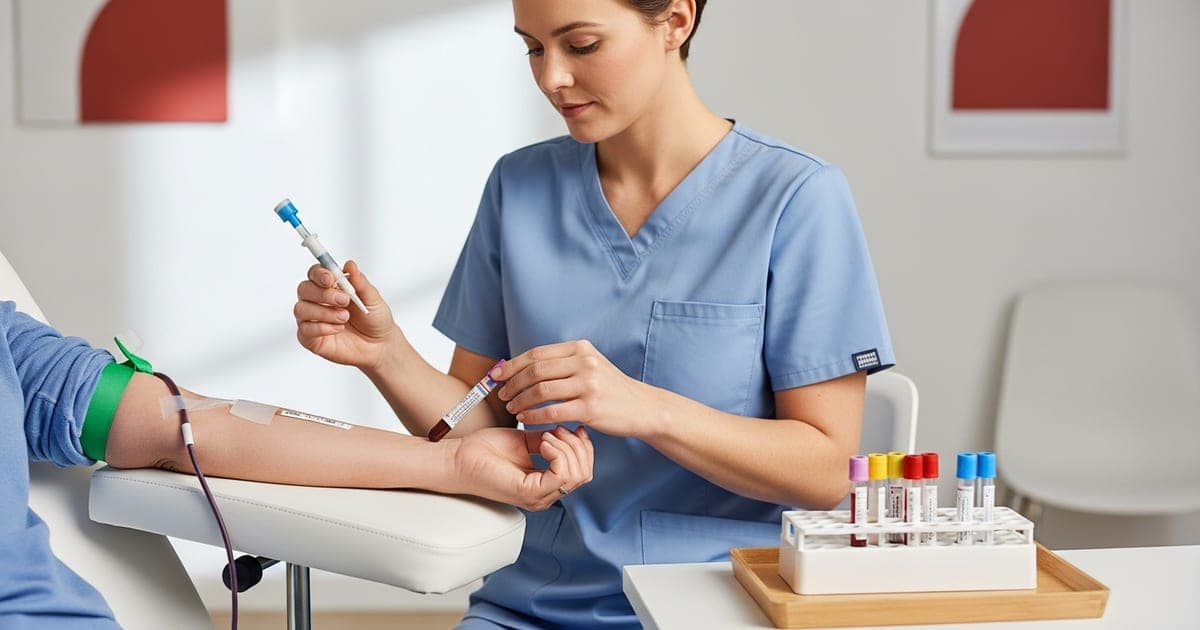
A small amount of discomfort after a blood draw is common and almost always resolves on its own within a day or two. Here is what's normal for two of the most commonly reported after-effects — headache and fatigue — plus a quick note on bruising, and what would be worth mentioning to your provider.
Headache after a blood draw
A mild headache shortly after a draw is usually related to a brief dip in blood pressure — a vasovagal response, described in more detail below — especially in people prone to feeling lightheaded around needles, or to mild dehydration if fluids weren't taken in beforehand. It typically resolves within a few hours with rest, hydration, and something to eat if you were fasting.
What helps
- Sit or lie down for a few minutes after the draw if you feel at all lightheaded — don't rush to stand up and leave.
- Drink water; see our guide on how dehydration affects blood draws for why this matters.
- Eat something if you had been fasting for the test.
Contact your provider if the headache is severe, doesn't improve within a day, or is accompanied by vision changes, confusion, or fainting.
Feeling tired after a blood draw
Feeling unusually tired after a blood draw is common and is typically a mild vasovagal response — the body's nervous-system reaction to the sight of blood, a needle, or the draw itself, which can temporarily lower blood pressure and heart rate. Mayo Clinic and other clinical sources describe vasovagal syncope (fainting) as the more severe end of this same reflex; feeling drained or sleepy afterward is a much more common, milder version of the same response. It tends to be more noticeable in people who are anxious about needles, haven't eaten, or are mildly dehydrated.
Fatigue from a standard diagnostic draw (a few small tubes, typically totaling well under an ounce) is almost never related to the small volume of blood removed — a routine draw is a tiny fraction of your total blood volume (roughly 10 pints in an average adult) and is not comparable to the volume taken during a whole-blood donation, which can cause more noticeable, longer-lasting fatigue for some donors.
What helps
- Rest for a few minutes before standing up.
- Eat a small snack, especially if you were fasting.
- Stay hydrated for the rest of the day.
If fatigue is severe, doesn't improve within a day, or comes with fainting or a rapid heartbeat, contact your provider.
A note on bruising
Bruising at the draw site is also common, but common enough — and involved enough to explain properly — that we cover it in its own dedicated guide: why you bruise after a blood draw and how to make it go away faster, including who bruises more easily and exactly when to call your doctor.
When to contact your provider
Reach out to your provider if you experience a rapidly expanding bruise, signs of infection at the draw site (increasing redness, warmth, or pus), numbness or tingling that doesn't resolve, a severe or worsening headache, or fainting. These are uncommon after a routine blood draw, but worth addressing promptly if they occur.
What actually causes the vasovagal response
The vasovagal reflex is triggered by the vagus nerve, which can overreact to stimuli like pain, the sight of blood or needles, standing for a long time, or emotional stress. When it fires, it causes a sudden drop in heart rate and blood pressure, which temporarily reduces blood flow to the brain — producing symptoms from mild lightheadedness and fatigue on one end of the spectrum, up to brief fainting (vasovagal syncope) on the more severe end. It is a normal, common nervous-system reflex, not a sign of a heart or blood problem, though people who faint should always mention it to their provider so it can be documented.
Tips to reduce the chance of feeling unwell after a draw
- Eat a light meal or snack in the hours before your appointment unless you are fasting for the test.
- Stay hydrated — see our guide on how dehydration affects blood draws.
- Sit or lie down for the draw rather than standing, if that's an option.
- Tell your phlebotomist in advance if you have a history of feeling faint or lightheaded during blood draws — they can have you lie down and plan extra recovery time before you get up.
- Look away from the needle and the tube if that helps reduce anxiety; there is no clinical benefit to watching the draw itself.
A home blood draw has a practical advantage here: if you do feel lightheaded or tired afterward, you are already in a comfortable, familiar setting where you can rest immediately, rather than needing to drive yourself home from a clinic.
Need blood drawn at home?
Speedy Sticks sends a certified phlebotomist to your door — no clinic visit required. Book online with your lab order.
Book a Mobile Blood Draw →