
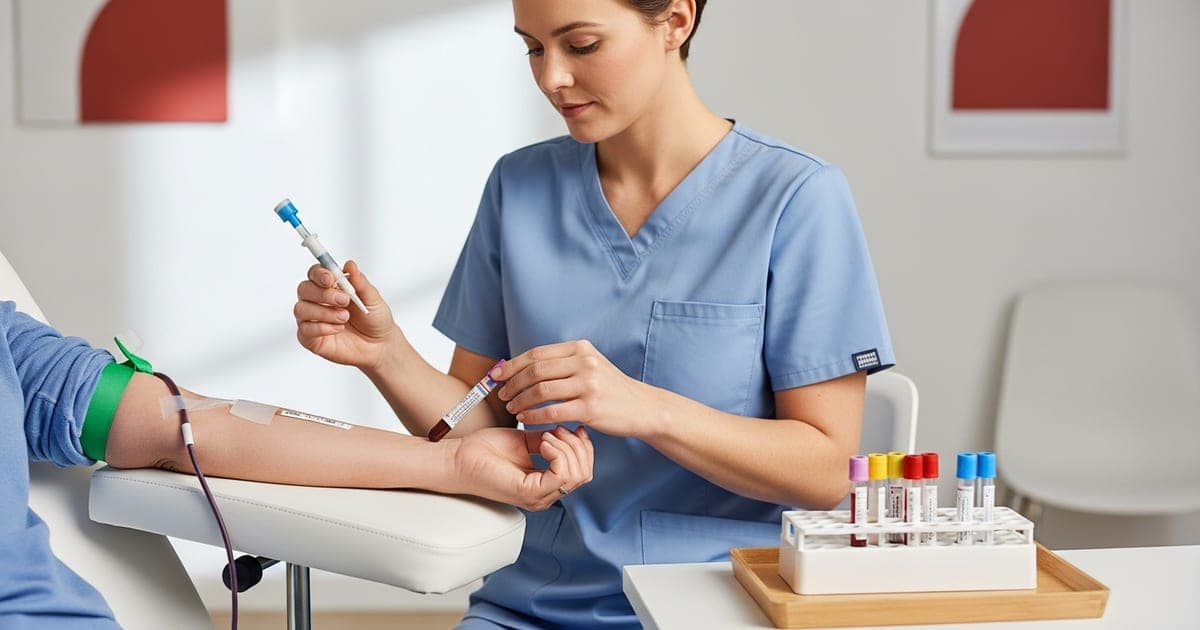
Dehydration affects blood testing in two distinct ways: it can make the physical draw harder, and it can shift certain lab values enough to matter for interpretation. Both are easy to prevent with basic preparation before your appointment.
How dehydration affects the draw itself
When you are dehydrated, your total blood volume decreases and your veins constrict and become less full, making them harder to see and feel. This is one of the most common causes of a “hard stick” — a draw that takes longer or requires more than one attempt because the phlebotomist cannot easily access a vein. Well-hydrated veins are plumper, sit closer to the surface, and yield blood more readily, which is why most preparation instructions include drinking water before your appointment (unless your specific test requires fasting from fluids as well as food, which your provider will specify). For tips on making veins easier to access generally, see our guide on how to avoid blown veins during a blood draw.
How dehydration can affect lab results
Because dehydration reduces plasma volume without necessarily changing the total amount of certain substances in your blood, several common lab values can shift when you are dehydrated:
- Hematocrit and hemoglobin can appear falsely elevated because the same number of red blood cells is now concentrated in less fluid — a phenomenon called hemoconcentration. See our CBC blood test guide for what normal hematocrit and hemoglobin ranges look like.
- BUN (blood urea nitrogen) and creatinine can rise, sometimes prompting unnecessary follow-up for kidney function when the actual cause is simply low fluid intake before the draw.
- Sodium can trend higher in more severe dehydration, since sodium concentration rises as plasma water decreases.
- Total protein and albumin can appear mildly elevated due to hemoconcentration, even when true protein levels are normal.
- Potassium can occasionally shift slightly, which is one more reason our tube colors guide notes that correct collection technique matters as much as hydration status for an accurate potassium result.
None of these shifts are dangerous on their own, but they can complicate interpretation — a mildly elevated creatinine from dehydration looks the same on paper as one from an actual kidney concern until the full picture, including hydration status at the time of the draw, is considered by your provider.
Which tests are most sensitive to hydration status
Kidney function panels (BUN, creatinine, eGFR), electrolyte panels, and hematocrit/hemoglobin as part of a CBC are the most commonly affected. Tests like glucose, lipid panels, and most hormone levels are generally less sensitive to short-term hydration changes, though severe dehydration can still have some effect across the board.
How to prepare
Unless your provider has instructed you to fast from fluids, drink water normally in the hours leading up to your blood draw — most guidance suggests several glasses of water in the two hours beforehand if your schedule allows it. Avoid excessive caffeine or alcohol beforehand, since both have a diuretic effect that works against you. If your test requires fasting, you can typically still drink plain water — check your specific requisition, review our guide to fasting for blood work, or ask your phlebotomist, since fasting rules vary by test.
Signs you may be dehydrated before an appointment
Common signs of mild to moderate dehydration include dark yellow urine, thirst, dry mouth, headache, and feeling unusually tired — the same fatigue that can also follow a blood draw itself, discussed in our guide on what's normal after a blood draw. If you notice several of these signs before a scheduled draw, drinking water in the hour or two beforehand (fasting permitting) can make a meaningful difference in both how easy the draw is and how representative your results are.
How much water is enough before a blood draw
There is no single universal number, since needs vary by body size, climate, and activity level, but general guidance suggests two to three glasses of water in the two hours before your appointment is usually enough to improve vein visibility without over-diluting results for tests that are hydration-sensitive. If you are having a fasting test, plain water does not break a fast and is generally encouraged rather than restricted — it's food, coffee, and sugary or alcoholic drinks that are limited, not water itself.
Special situations: older adults and chronic conditions
Older adults are more prone to mild chronic dehydration because thirst sensation naturally declines with age, and certain medications (like diuretics prescribed for blood pressure) increase fluid loss. If you take a diuretic or manage a condition like heart failure or kidney disease where fluid intake is medically restricted, do not simply increase water intake before a blood draw without checking with your prescribing physician first — in these cases, your provider's fluid guidance takes priority over general blood-draw preparation advice.
Need blood drawn at home?
Speedy Sticks sends a certified mobile phlebotomist to your door — no clinic visit required. Book online with your lab order.
Book a Mobile Blood Draw →