
★★★★★
“Pamela was fantastic — calm, clean, professional yet warm. Exactly what you want for an at-home blood draw.”
Verified patient
Miami, FL
Anticoagulation monitoring
PT/INR monitoring for warfarin (coumadin) therapy requires regular, consistently timed draws—missed appointments or delayed specimens can disrupt anticoagulation management. Speedy Sticks provides mobile phlebotomy for anticoagulation clinic programs, enabling patients to complete recurring INR draws at home with standardized collection and routing aligned to your clinic's lab.
The process
From booking to lab handoff — the whole at-home blood draw, start to finish.
< 3 min
to complete booking
Choose a time window, add your requisition or kit reference, and confirm. We handle the rest from there.
Live ETA
tracked to your door
You get notified the moment we're on the way. Identity and lab order are verified on arrival.
10–15 min
average visit time
Best-practice venipuncture, lab-specific tube order and handling, chain of custody started at first stick.
Done.
your part is finished
Specimens are packaged within stability windows and delivered to your designated lab. Full chain-of-custody end to end — nothing more required from you.
Why Speedy Sticks
Certified phlebotomists operating across major U.S. metros and expanding markets.
Standardized labeling, chain-of-custody documentation, and routing tuned to your downstream lab.
Arrival windows that work around your day — patients, employers, and provider teams.
Collection protocols aligned to order requirements so results are not delayed upstream.
Process
Simple, professional, and designed around your schedule — not ours.
Book your visit
Schedule online with your lab requisition, program instructions, or kit details so we can match the right workflow.
Phlebotomist arrives
A certified collector arrives in your scheduled window, verifies identity and orders, and prepares tubes per protocol.
Collection & lab handoff
We follow venipuncture best practices and lab-specific handling, then route your specimen with full chain-of-custody documentation.



Patient reviews
“Pamela was fantastic — calm, clean, professional yet warm. Exactly what you want for an at-home blood draw.”
Verified patient
Miami, FL
“Valerie was wonderful and very gentle. She gave me all the information I needed and made the process completely stress-free.”
Verified patient
Los Angeles, CA
“I was nervous about a home blood draw, but the phlebotomist was so professional. I will never go back to a lab waiting room.”
Verified patient
New York, NY
Pricing
$150–$250
typical per-visit range for individual bookings
See your price before you confirm
Your exact visit price is shown during booking — no surprises, no hidden fees.
Visit fee is separate from lab charges
You pay Speedy Sticks for the at-home collection; your lab bills any test charges directly.
No insurance billing — pay directly
We don't bill insurance for the visit. HSA/FSA itemized receipts are available on request.
Priced to your visit
Final price reflects your location, timing, and what's being collected in the appointment.
Prothrombin time and INR measurement uses sodium citrate tubes with an exact 9 to 1 blood-to-anticoagulant ratio. An underfilled tube, even 10 percent under the fill line, dilutes the citrate relative to blood, artificially prolonging clotting time and producing a falsely elevated INR result. A falsely elevated INR reading can prompt an unnecessary warfarin dose reduction that allows the true INR to fall below therapeutic range, putting the patient at clot risk. This is not a theoretical concern. Underfilled tubes are the most common pre-analytical error in coagulation testing. Every Speedy Sticks phlebotomist fills blue-top tubes to the fill line every visit. This is the minimum standard that anticoagulation monitoring requires.
Patients on warfarin therapy require periodic PT/INR monitoring to confirm levels remain within the therapeutic range specific to their condition: 2.0 to 3.0 for atrial fibrillation and most DVT and PE cases; 2.5 to 3.5 for mechanical heart valves. Monitoring frequency ranges from weekly during dose adjustment to monthly when stable. Patients with mobility limitations, those who live far from clinical facilities, elderly patients relying on family transport, and those whose health conditions make traveling to a lab center difficult are exactly the patients for whom consistent monitoring is most critical and most logistically challenging. At-home INR monitoring eliminates the transportation barrier and keeps anticoagulation management consistent.
Many warfarin patients are managed through dedicated anticoagulation clinics within cardiology, hematology, or primary care practices. These programs review INR results and adjust warfarin doses through a structured protocol, often using pharmacist-driven dosing algorithms. Speedy Sticks can establish recurring draw programs aligned to your clinic's monitoring calendar: weekly draws during dose adjustment phases, biweekly during stabilization, monthly for stable patients. We route specimens to the lab your anticoagulation clinic uses and can provide collection documentation in formats compatible with your clinical workflow. Contact us to discuss program-level coordination for patient panels managed through your anticoagulation program.
Warfarin is not the only anticoagulant requiring monitoring, though it remains the most commonly monitored. Direct oral anticoagulants including apixaban, rivaroxaban, and dabigatran generally do not require routine INR monitoring, but patients on these agents still need periodic kidney function tests to ensure adequate drug clearance and safety. Patients anticoagulated for mechanical heart valves often need more frequent and tighter INR monitoring than those anticoagulated for atrial fibrillation. Heparin infusions require aPTT monitoring, typically in inpatient settings outside our scope. Bring your complete medication list and any special instructions from your anticoagulation clinic at booking so we can plan the visit appropriately.
Speedy Sticks provides coumadin clinic blood draw across major U.S. cities and expanding regional markets.
Explore availability in:
For teams
Clinics, labs, research teams, and employers use Speedy Sticks to extend collection capacity without sacrificing protocol fidelity. API integration, bulk scheduling, and compliance documentation included.

A Coumadin clinic blood draw is a PT/INR (prothrombin time / international normalized ratio) test used to monitor warfarin (Coumadin) anticoagulation therapy. Regular INR monitoring allows clinicians to keep patients within their therapeutic range—preventing blood clots or dangerous bleeding. Patients on warfarin often require testing weekly or biweekly, making home-based mobile phlebotomy a significant quality-of-life improvement over repeated clinic trips. The therapeutic INR range for most patients on warfarin is 2.0–3.0, though it varies by indication (for example, patients with mechanical heart valves may target 2.5–3.5). Your cardiologist or anticoagulation clinic defines your target range and adjusts your dose based on each result. Speedy Sticks provides mobile phlebotomy for PT/INR draws so anticoagulated patients can complete required monitoring at home without the burden of repeated clinic visits.
Jump to the primary mobile phlebotomy hub, adjacent programs, or our locations directory — same nationwide routing for patients, providers, and labs.
Education and lab navigation from the Speedy Sticks blog.
See it in action
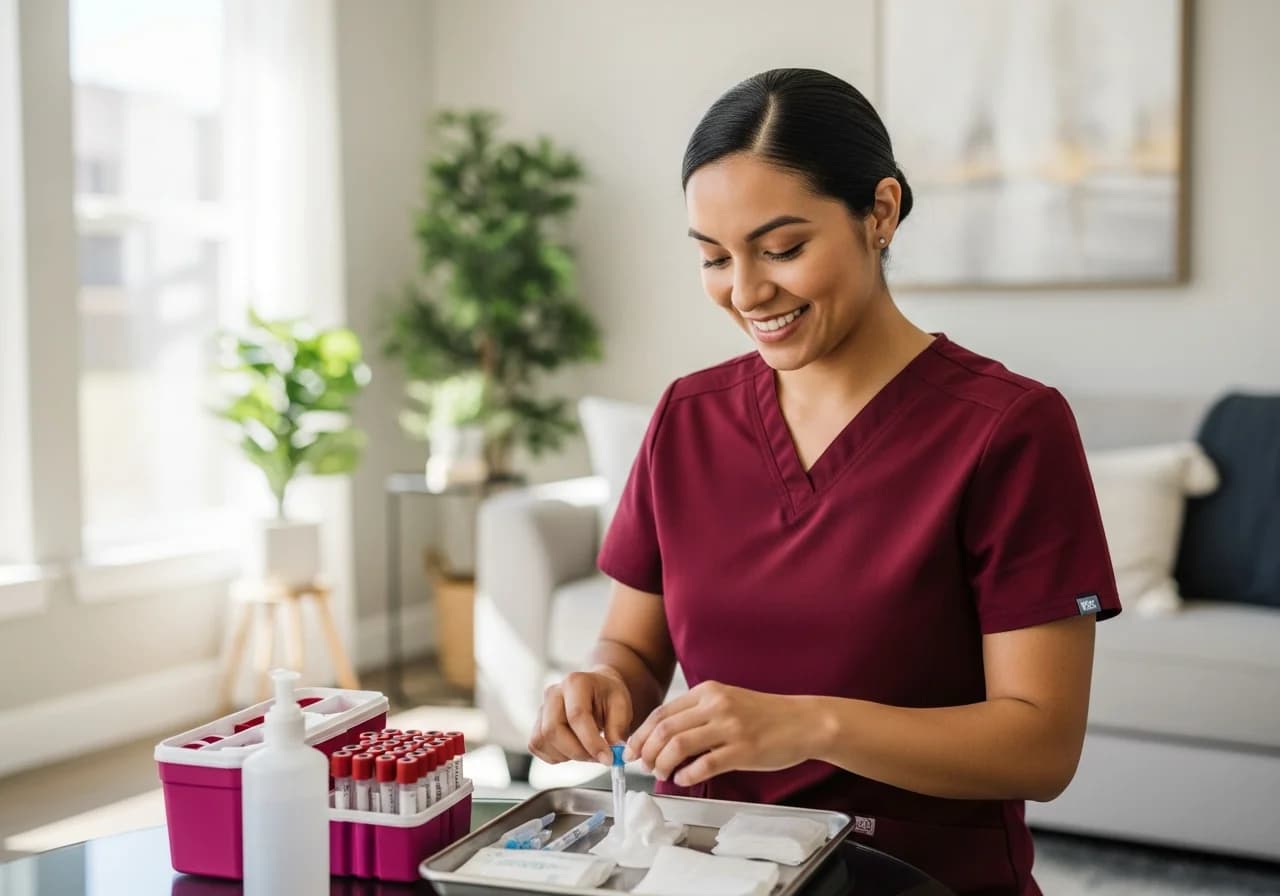
Your certified phlebotomist arrives at your door with everything needed — no lab visit, no waiting room. Watch how simple it is.
Straight answers on coverage, orders, timing, and logistics.
Yes. Speedy Sticks provides nationwide coumadin clinic blood draw across major U.S. cities and expanding regional markets—book online to confirm availability for your address.
Read the full answer