
When your doctor orders blood work, you have two options for getting it drawn: go to a patient service center (PSC) at a lab like Quest or Labcorp, or schedule a mobile phlebotomist to come to you. Both get blood into tubes. Both send it to the same reference lab. The results are the same. What differs is the experience, the logistics, and who pays for what.
| Factor | Patient Service Center (PSC) | Mobile Phlebotomy (Speedy Sticks) |
|---|---|---|
| Who moves | You travel to the lab | Phlebotomist travels to you |
| Total time | 90–180 min (commute + wait + draw) | 15–30 min (draw at home) |
| Appointment required | Sometimes (walk-in available) | Yes (booked in advance) |
| Collection fee | Waived with insurance at PSC | $150 for individual bookings (HSA/FSA eligible) |
| Lab processing fee | Billed to insurance by Quest/LabCorp | Same — billed to insurance by Quest/LabCorp |
| Reference lab used | Quest Diagnostics or LabCorp | Quest Diagnostics or LabCorp (your choice) |
| Result quality | Identical | Identical |
| Best for | Cost-sensitive patients near a PSC | Homebound, busy, anxious, or mobility-limited patients |
What actually happens in each case
At a PSC, you drive to a Quest or Labcorp location, check in, wait to be called, and a staff phlebotomist draws your blood. The specimen goes to the same central reference lab it always does. You drive home. The whole process — commute, parking, wait, draw, return — typically takes 90 to 180 minutes out of your day.
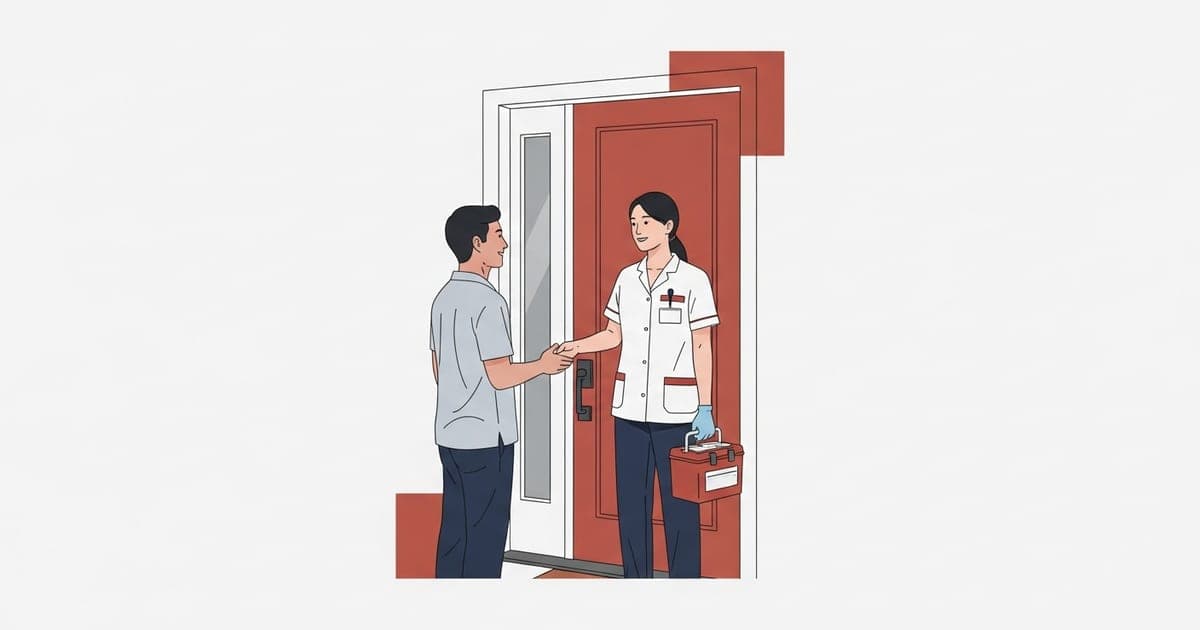
With mobile phlebotomy, a certified phlebotomist comes to your home, apartment, or workplace. You do not move. You open the door, sit in your chair or lie in bed, and the draw happens in your own space. The phlebotomist packages the specimen and transports it to the same Quest or Labcorp central lab. From there, processing and results are identical.
The blood test results are identical
This is the most important thing to understand: the test results from a home blood draw and a PSC draw are the same. The reference ranges are the same. The turnaround time is the same. The results portal (MyQuest or Labcorp Patient) is the same.
Speedy Sticks routes all specimens to Quest Diagnostics or Labcorp — the same two national reference labs that process the majority of US outpatient blood work. Your doctor receives results through the same channels. There is no trade-off in quality or accuracy between the two options.
When a patient service center is the right choice
- You are cost-sensitive and have no HSA or FSA. If your insurance covers the lab tests and you have met your deductible, a PSC draw may cost you little or nothing beyond the copay. Mobile phlebotomy adds a visit fee that is typically paid out of pocket.
- You need very same-day or STAT results. Most standard lab results come back within 24 to 48 hours from both options. For true STAT processing, discuss with your physician — a hospital lab or clinical setting may be more appropriate than either a PSC or mobile draw.
- You prefer a clinical setting. Some patients feel more comfortable in a medical office environment. That is a valid preference.
- You live or work near a PSC with short wait times. Quest and Labcorp together have thousands of locations. If there is a PSC a five-minute walk away with no appointment required, the convenience gap narrows.
When mobile phlebotomy is the right choice
- Your time matters. A home draw takes roughly 20 to 30 minutes of your actual time — a phlebotomist arrives, draws, and leaves. No commute, no waiting room, no parking. For a professional billing $50 to $150 per hour, the time savings alone may exceed the visit fee.
- You are elderly, have limited mobility, or cannot drive. A PSC draw requires transportation. A home draw requires opening your door. For patients managing mobility limitations, chronic illness, or recovery from surgery, this is not a convenience preference — it is a meaningful access difference.
- You have needle anxiety. Drawing blood in your own home — lying on your couch, in a controlled environment, with no other patients around — is meaningfully less stressful than a waiting room. For patients with vasovagal responses or needle phobia, the home setting reduces the anxiety triggers that cause fainting. See our guide on blood draws for needle anxiety.
- You are doing a fasting blood draw. A fasting blood draw requires you to skip food for 8 to 12 hours. Driving to a PSC while fasted — hunger, low blood sugar, sometimes early morning — is unpleasant. A home draw means you fast overnight, open your door in the morning, and eat immediately after the phlebotomist leaves. No commute while depleted.
- You need recurring draws on a predictable schedule. Patients on anticoagulation therapy, undergoing chemotherapy, managing diabetes, or on TRT often need blood drawn every 4 to 12 weeks. Setting up a recurring home draw schedule eliminates 12 to 24 clinic trips per year.
- There is no PSC near you. In rural and suburban areas, the nearest Quest or Labcorp location may be 30 to 45 minutes away. The home visit fee can be less than the cost of gas and time for a round trip.
- You are managing a cold, infection, or other contagious illness. When you are sick and need a CBC or metabolic panel, a waiting room with other patients is not ideal for anyone. A home draw eliminates the exposure question entirely.
Cost comparison
The direct cost comparison depends on your specific insurance situation:
- PSC draw: The lab tests are processed through insurance — your copay, coinsurance, or deductible applies. If you have met your deductible, the lab tests may cost you nothing. If you have not, they apply toward your deductible. The PSC draw itself carries no separate service fee.
- Home draw: The lab tests are processed through insurance the same way — same Quest or Labcorp, same CPT codes, same coverage rules. You also pay a separate visit fee for the mobile phlebotomy service. This fee can be paid with HSA or FSA funds (a qualifying medical expense), which reduces the effective cost by 20 to 35 percent for most people.
The true cost comparison is not just the fee — it is the fee weighed against your time. Ninety to 180 minutes of your day, plus gas and parking, has a real value. For many people, particularly those with demanding work schedules, the visit fee is the smaller number.
Do you need a doctor's order for either option?
Yes — for both. A physician order (also called a requisition or lab order) is required to have blood drawn through Quest or Labcorp regardless of whether you go to a PSC or book a home draw. Your doctor provides this as they normally would — through your patient portal or as a paper order. You share it when you book the home draw, and the phlebotomist brings it to the visit.
Some direct-to-consumer lab services allow you to order your own tests without a physician. Speedy Sticks operates differently: we draw on physician orders routed through the same national reference labs, which means results go through the standard medical record pipeline.
The practical summary
Both options deliver the same diagnostic result to your doctor. Choose a PSC if you are cost-sensitive, near a convenient location, and comfortable with the clinic experience. Choose a home draw if your time is the binding constraint, if access is a barrier, or if the home environment meaningfully reduces stress or logistical friction. For most patients who have tried both, the experience difference is significant enough that home becomes the default — especially for recurring draws.
Sources and further reading
Try Mobile Phlebotomy for Your Next Draw
No commute, no waiting room, same certified lab. A Speedy Sticks phlebotomist comes to you at your scheduled time — home, office, or facility.
Book a visit →