
★★★★★
“Pamela was fantastic — calm, clean, professional yet warm. Exactly what you want for an at-home blood draw.”
Verified patient
Miami, FL
★★★★★ A+ BBB Rated • Nationwide Mobile Phlebotomy
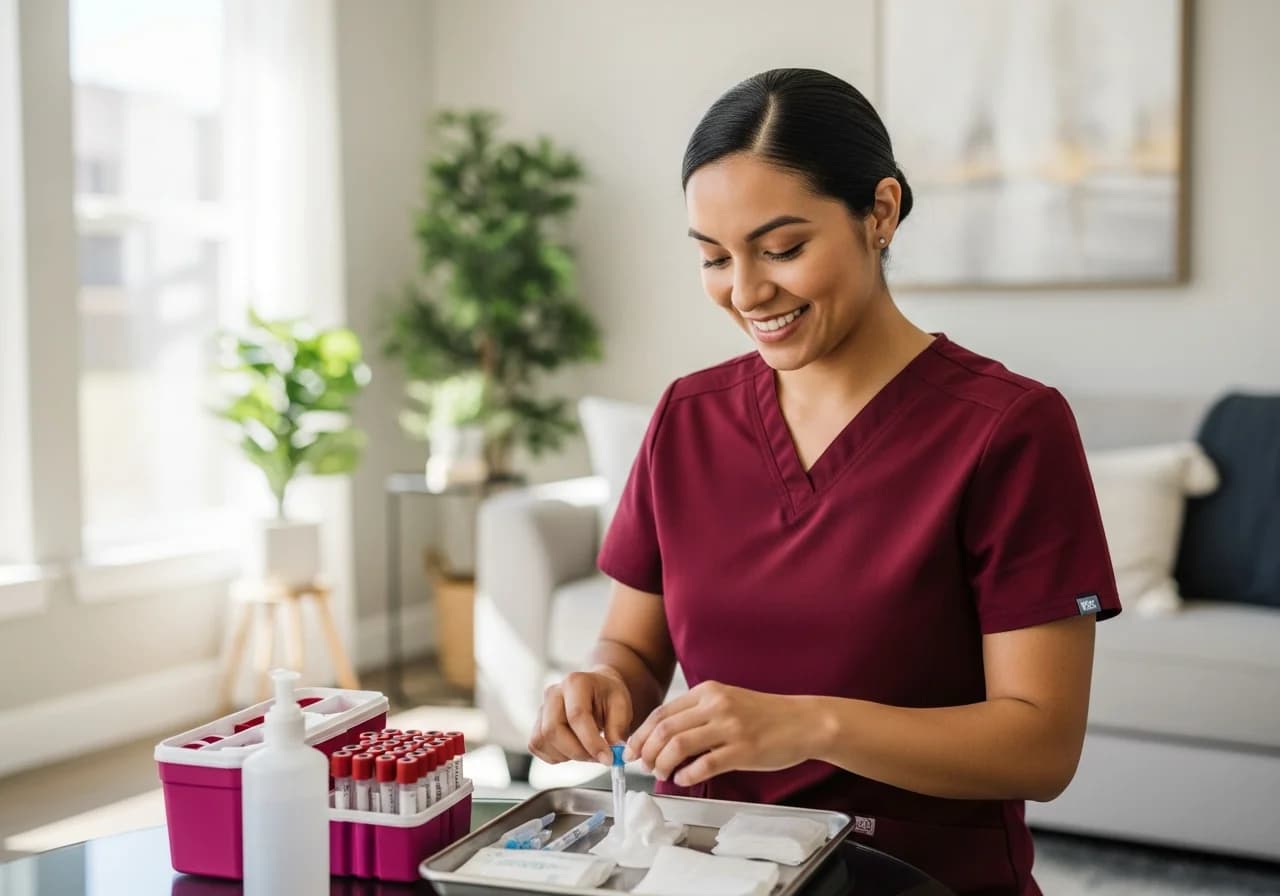
Hard-stick patients often dread blood draws after experiences with multiple painful attempts or outright refusal at a lab. At-home phlebotomy changes the equation—our collectors arrive with butterfly needles, proper supplies, and extra time, in an environment where relaxed positioning helps veins present better.
The process
From booking to lab handoff — the whole at-home blood draw, start to finish.
< 3 min
to complete booking
Choose a time window, add your requisition or kit reference, and confirm. We handle the rest from there.
Live ETA
tracked to your door
You get notified the moment we're on the way. Identity and lab order are verified on arrival.
10–15 min
average visit time
Best-practice venipuncture, lab-specific tube order and handling, chain of custody started at first stick.
Done.
your part is finished
Specimens are packaged within stability windows and delivered to your designated lab. Full chain-of-custody end to end — nothing more required from you.
Why Speedy Sticks
Certified phlebotomists operating across major U.S. metros and expanding markets.
Standardized labeling, chain-of-custody documentation, and routing tuned to your downstream lab.
Arrival windows that work around your day — patients, employers, and provider teams.
Collection protocols aligned to order requirements so results are not delayed upstream.
Process
Simple, professional, and designed around your schedule — not ours.
Book your visit
Schedule online with your lab requisition, program instructions, or kit details so we can match the right workflow.
Phlebotomist arrives
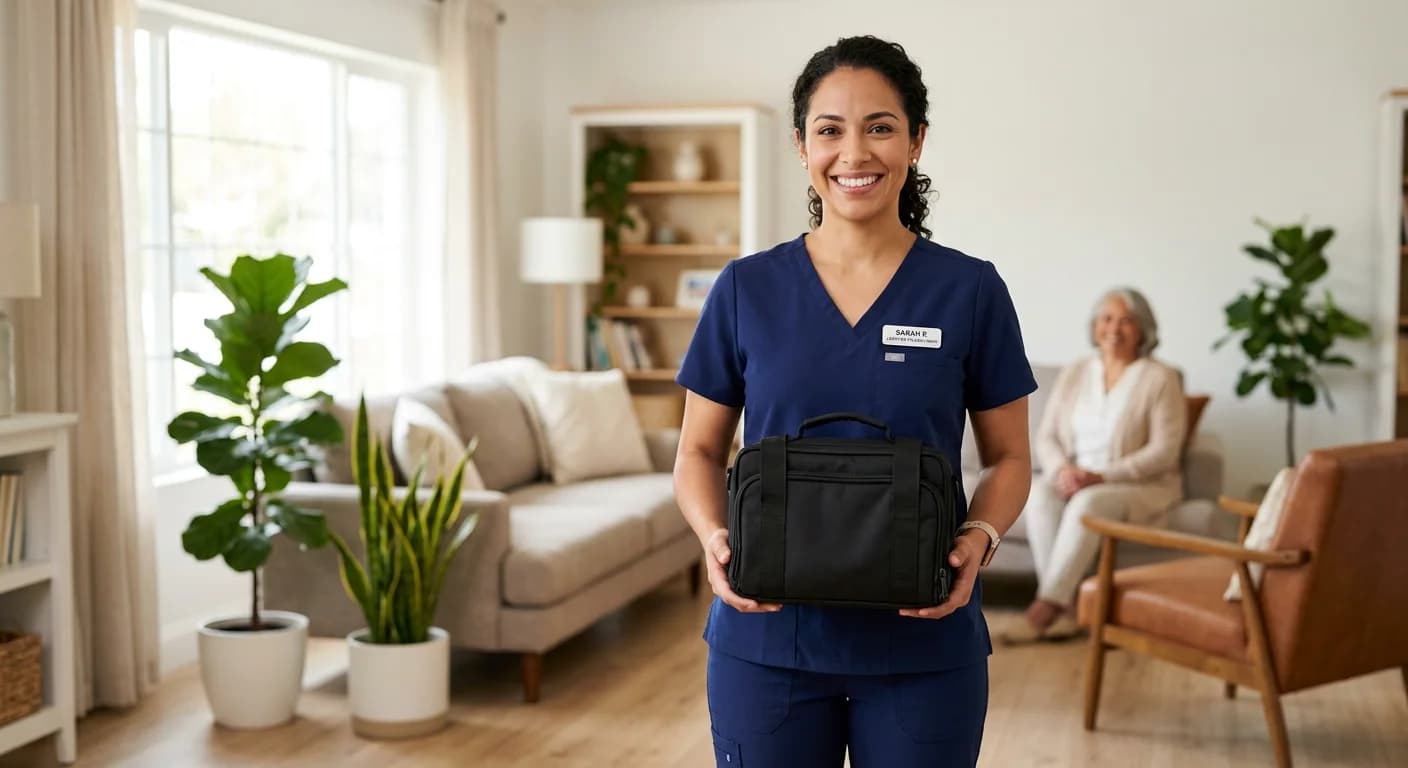
A certified collector arrives in your scheduled window, verifies identity and orders, and prepares tubes per protocol.
Collection & lab handoff
We follow venipuncture best practices and lab-specific handling, then route your specimen with full chain-of-custody documentation.

Patient reviews
“Pamela was fantastic — calm, clean, professional yet warm. Exactly what you want for an at-home blood draw.”
Verified patient
Miami, FL
“Valerie was wonderful and very gentle. She gave me all the information I needed and made the process completely stress-free.”
Verified patient
Los Angeles, CA
“I was nervous about a home blood draw, but the phlebotomist was so professional. I will never go back to a lab waiting room.”
Verified patient
New York, NY
Pricing
$150–$250
typical per-visit range for individual bookings
See your price before you confirm
Your exact visit price is shown during booking — no surprises, no hidden fees.
Visit fee is separate from lab charges
You pay Speedy Sticks for the at-home collection; your lab bills any test charges directly.
No insurance billing — pay directly
We don't bill insurance for the visit. HSA/FSA itemized receipts are available on request.
Priced to your visit
Final price reflects your location, timing, and what's being collected in the appointment.
A patient service center phlebotomist has a queue of patients behind you. The institutional incentive is throughput, completing draws efficiently across a high daily patient volume. When a patient has difficult venous access, the clinical calculus often involves a limited number of attempts and then documentation of unsuccessful collection with a recommendation to try again another day. That outcome is unacceptable when the draw is clinically necessary. At home, the equation reverses: the phlebotomist has no queue, no institutional pressure, no other patients waiting. A difficult draw gets the time it requires, including warming the arm, extended tourniquet, positional adjustments, and allowing the patient to relax. The success rate for difficult-vein patients improves substantially in home environments.
Difficult venous access has several distinct causes that respond to different accommodations. Small or shallow veins common in elderly patients and people with small frames benefit from fine-gauge butterfly needles, extended tourniquet time, and antecubital vein identification by feel rather than sight. Rolling veins benefit from anchoring technique and traction on the skin distal to the insertion site. Collapsed veins from dehydration or anxiety-related vasoconstriction respond to warm compresses for 5 to 10 minutes, full hydration before the visit, and arm-down positioning to maximize venous fill. Scar tissue from prior IV sites or repeated venipuncture benefits from alternative sites including forearm, wrist, or hand dorsal veins depending on patient anatomy.
When scheduling a draw for known difficult venous access, provide as much detail as possible: which arm or vein site has worked in the past, which sites have consistently failed, whether butterfly needles have worked better than standard needles, whether you tend to have veins that roll or collapse, whether you have scar tissue from prior IV sites, and whether you have any underlying conditions such as lupus, scleroderma, or chemotherapy-related vein damage that contribute to access difficulty. This information guides the phlebotomist's approach and ensures we arrive with the right needle sizes and supplies. Attempting a difficult draw without this context wastes time and increases the number of attempts needed unnecessarily.
Despite extended time, appropriate supplies, and skilled technique, some draws cannot be completed due to severe venous access failure. If this occurs, the phlebotomist will document the number of attempts, the sites tried, and the clinical circumstances. Per industry standards, we attempt a maximum of 2 to 3 sticks before concluding that the draw cannot be safely completed in that session. A failed visit fee may apply depending on the visit structure. We will discuss next steps with you: rescheduling with additional preparation including maximum hydration and extended warming, or escalation to a clinical facility with specialized access resources such as ultrasound-guided venipuncture available at some infusion centers and hospitals.
Speedy Sticks provides blood draw for hard to find veins across major U.S. cities and expanding regional markets.
Explore availability in:
For teams
Clinics, labs, research teams, and employers use Speedy Sticks to extend collection capacity without sacrificing protocol fidelity. API integration, bulk scheduling, and compliance documentation included.

Difficult venous access—veins that are small, rolling, scarred, deep, or prone to collapsing—is one of the most common reasons patients have painful or failed blood draws. Causes include: • Dehydration and small-caliber veins • Repeated IV access or prior phlebotomy causing scarring • Obesity or significant subcutaneous tissue • Chemotherapy-related vascular damage • Hemodialysis and prior IV drug use history • Older age and vein fragility At-home blood draws offer real advantages for difficult-vein patients: optimal body position (lying down, arm supported), a relaxed environment that aids vein dilation, and a phlebotomist who has the time to assess and attempt thoughtfully rather than rushing through a busy patient service center queue. Speedy Sticks provides mobile phlebotomy for hard-stick patients with experienced collectors and appropriate equipment for challenging venous access.
Jump to the primary mobile phlebotomy hub, adjacent programs, or our locations directory — same nationwide routing for patients, providers, and labs.
Education and lab navigation from the Speedy Sticks blog.
See it in action
Your certified phlebotomist arrives at your door with everything needed — no lab visit, no waiting room. Watch how simple it is.
Straight answers on coverage, orders, timing, and logistics.
Yes. Speedy Sticks provides nationwide blood draw for hard to find veins across major U.S. cities and expanding regional markets—book online to confirm availability for your address.
Read the full answer